

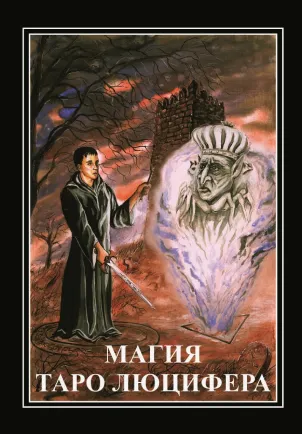
The history of “Lucifer’s Tarot” birth is represented by a rather long time period, but, perhaps, it is 2006 that can be confidently called the year of birth of this truly unique system. Why exactly 2006? Because in 2006 “Kashtan Publishing House” (Donetsk, Ukraine) published the very first book by Igor Bombushkar called “Kabbalah”, which became a landmark and largely predetermined the course of further events and work on the birth of “Lucifer’s Tarot”. This path was not easy at all…
The author had to spend more than three years of his life to go from the idea to the birth of the first arcane. And only a visit of St. Peter’s Basilica in Vatican, as a place of special and colossal power, allowed the author to complete the work which had started in December 2009.
“Lucifer’s Tarot” is neither a modification of the classic tarot deck, nor its analogue, and even more so, it is not the fruit of the author’s painful fantasies. This is an ancient system of knowledge that reflects the structure of Qliphoth Tree, but at the same time, is a universal source of magic practice. Of course only if he “hears its voice”, because the power of the “Lucifer’s Tarot” is limited solely by the personal force and the level of intelligence of the person who took this deck in his hands. The uniqueness of the system also lies in the fact that it is not only a mantic oracle system, but also a real magical artifact – an object of Power.
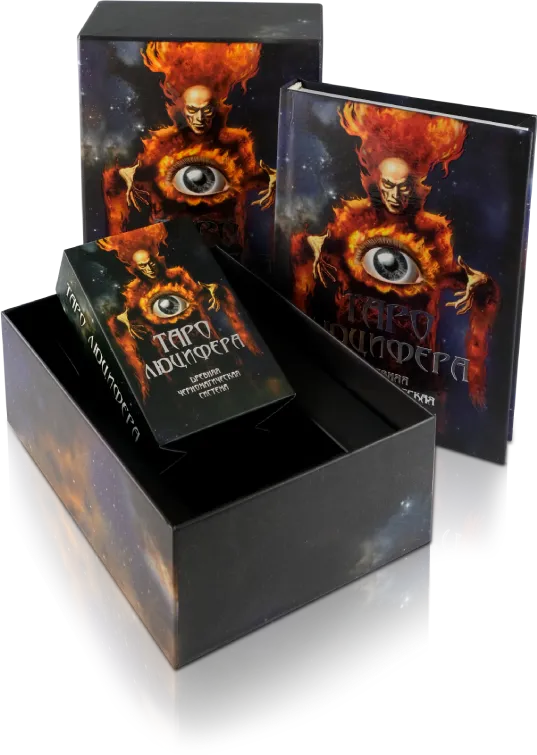
Yes, of course, everyone has such an opportunity. Indeed, in addition to the deck itself, there is still a manual book, as well as a study guide – “Magic of the Lucifer’s Tarot”, which provides a competent and comprehensive approach to the study of ritual practices carried out using the Lucifer’s Tarot deck. Without these essential components, this artifact will become just a spectacular set of 105 beautiful pictures for an inexperienced user. But speaking of opportunities, it is worth remembering that not always a person can independently understand such a complex system, since more often he does not have the necessary basic amount of special knowledge, which leads either to loss of the interest, or to misinterpretation and immersion in their own illusions.
To avoid such mistakes is not only possible, but necessary. To do this, there are individual classes and seminars, the time when the master is in live contact with you, helping you to take advantage of the opportunity to comprehend the secrets of the ancient magical system and learn how to work with it.

Many centuries passed before the great and ancient black magical system, called the "Lucifer’s Tarot” again became open for the Dark Art adepts.
And I am grateful to the Force for the fact that I was allowed not only to touch this Secret, but also to open it. To open for you, dear friends, those few and fearless who are not afraid to look straight in the eyes of Force and who are ready to stand face to face with this sizzling and manifested Force.
It is a bridge to the world of Darkness and an intermediary between this world and the practitioner of the Black Art…
The history of this deck’s birth is complicated...
Force never gives anything as a gift - without the strongest tension, super-efforts and overloads, struggles and losses.
Naturally, this priceless Gift of Force must be earned.
And before you get the right to access the great secret of Lucifer’s Tarot, you will have to give up a lot, and maybe lose a lot... - and this is only a small price to pay for the opportunity to gain true magical Knowledge...
Kemitiel, Belial and Atiel.
Lucifer created 10 hells ruled by the Archdemons, who are at the head of the troops from the corresponding legion of demons, located on the infernal earth.
The ten hells are located in seven palaces (Sheol, Abbadon, Titihoz, Bar Shachetom, Tselmos, Shaari Mot, Gyehanim) enclosed in four circles (circle of Gods of Chaos, circle of Archdemons, circle of Demons and circle of Demonic Lands).
⁃ 12 princes of Qliphoth (senior dark geniuses), arcana from 73 to 84
⁃ 10 hosts of Demons, arcana from 85 to 94
⁃ 8 Archdemons, arcana 95 to 102
⁃ 3 veils of Infernal Existence, arcana from 102 to 105
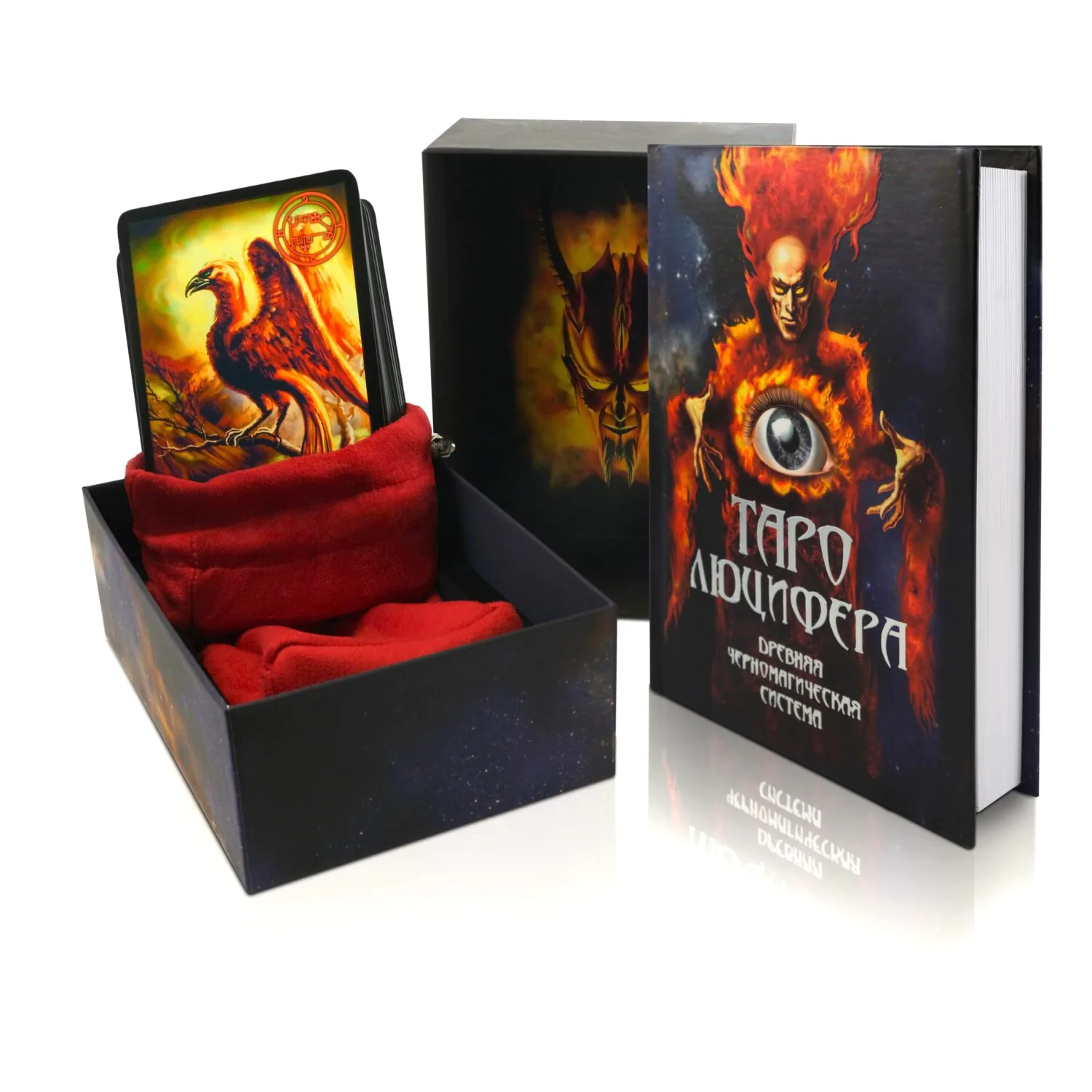
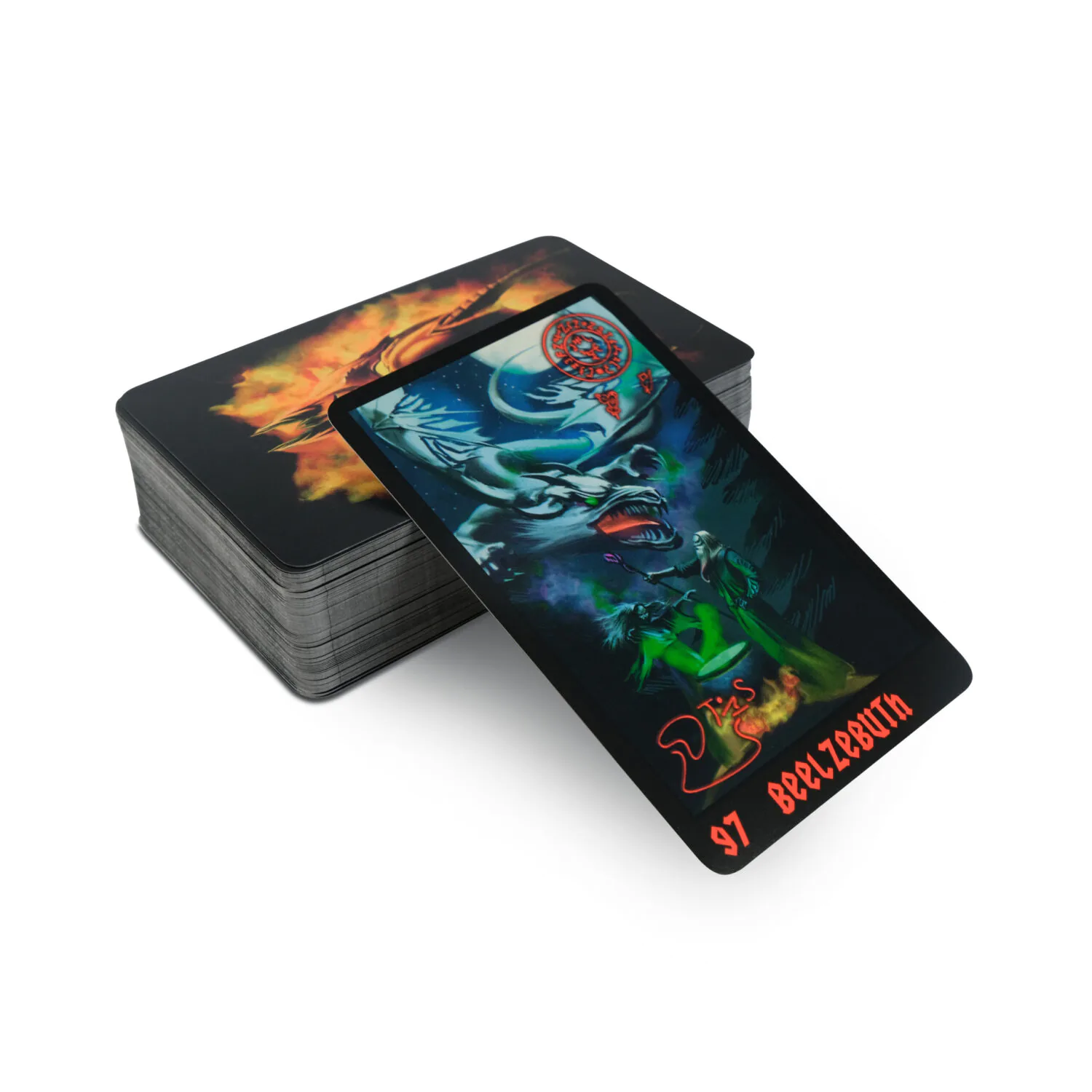
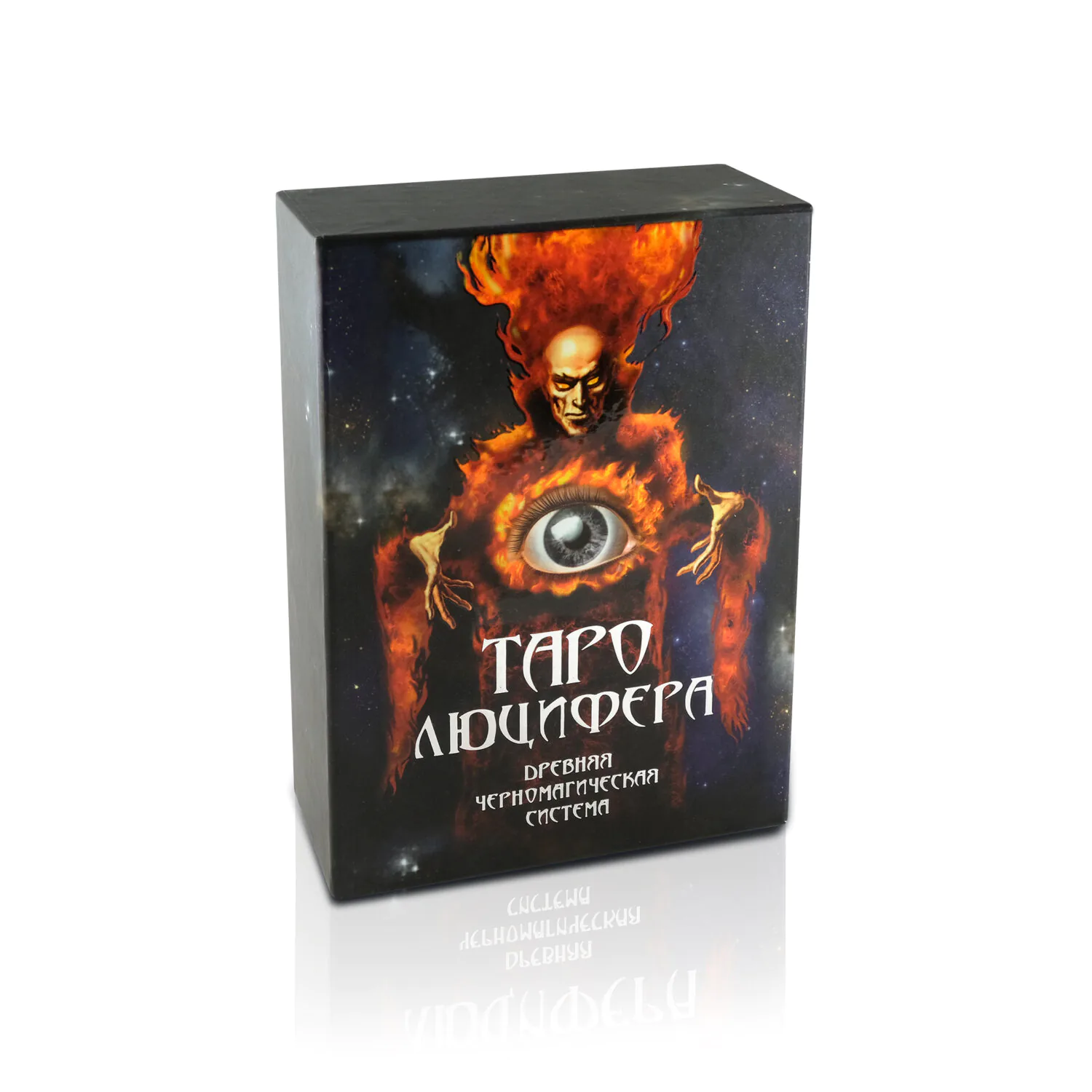
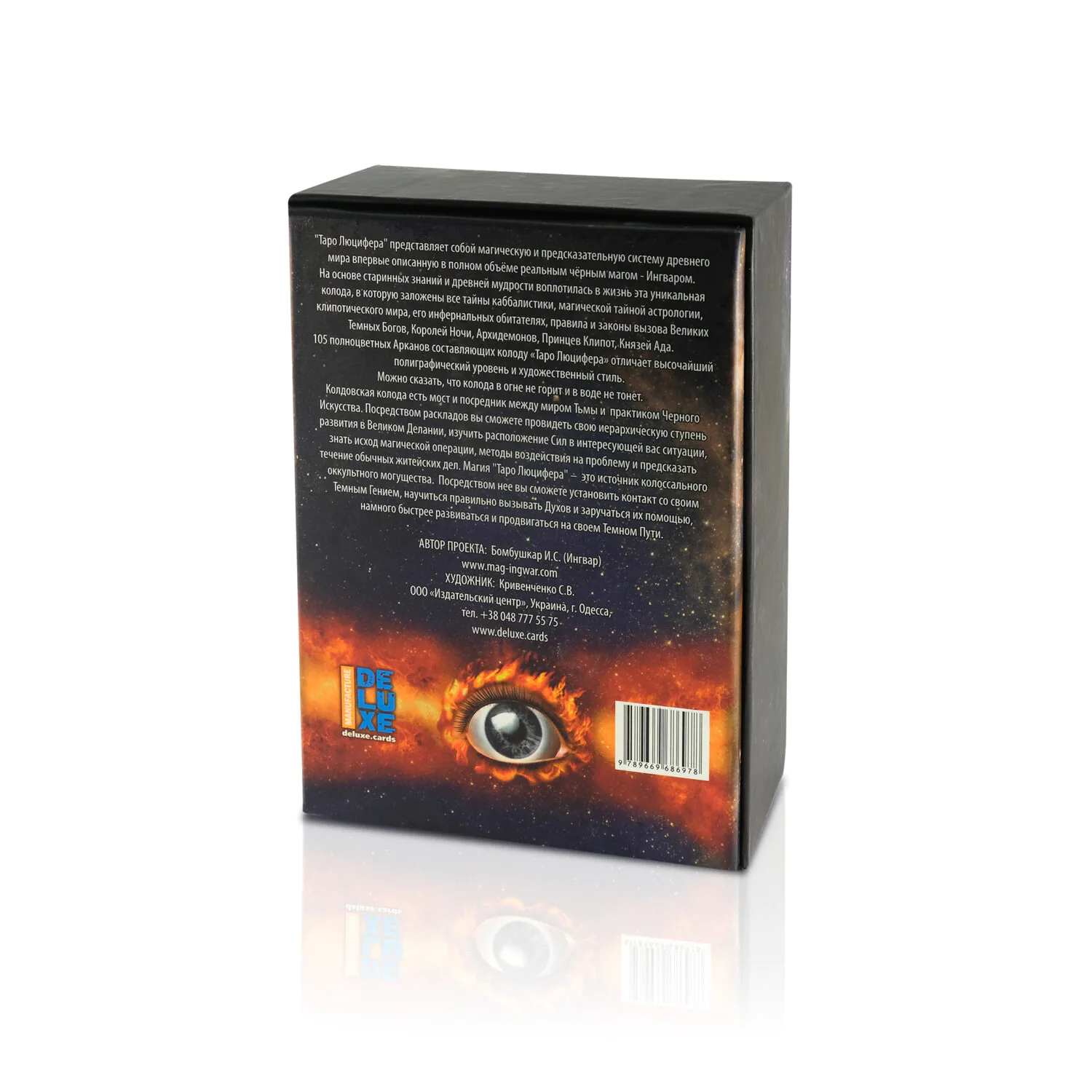
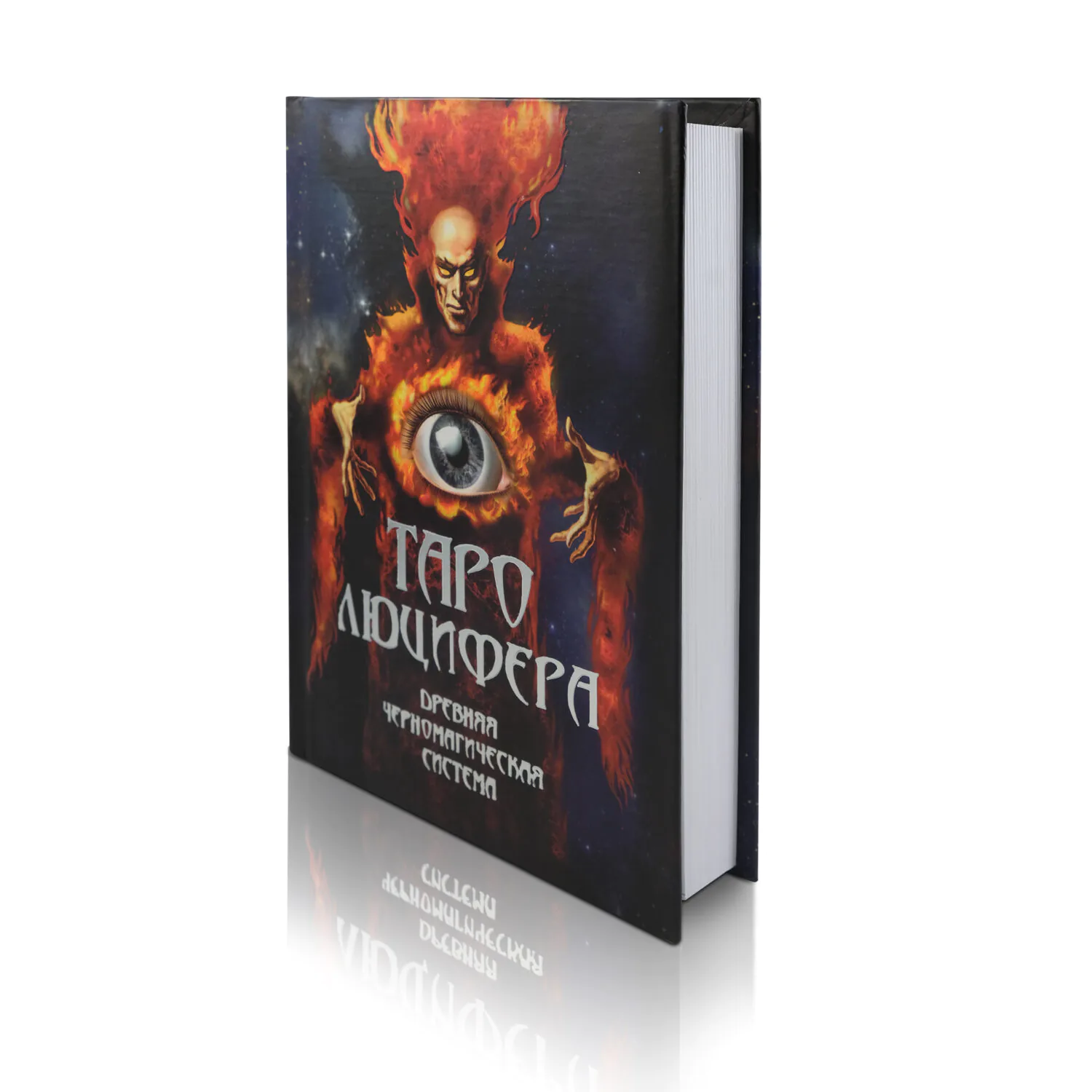
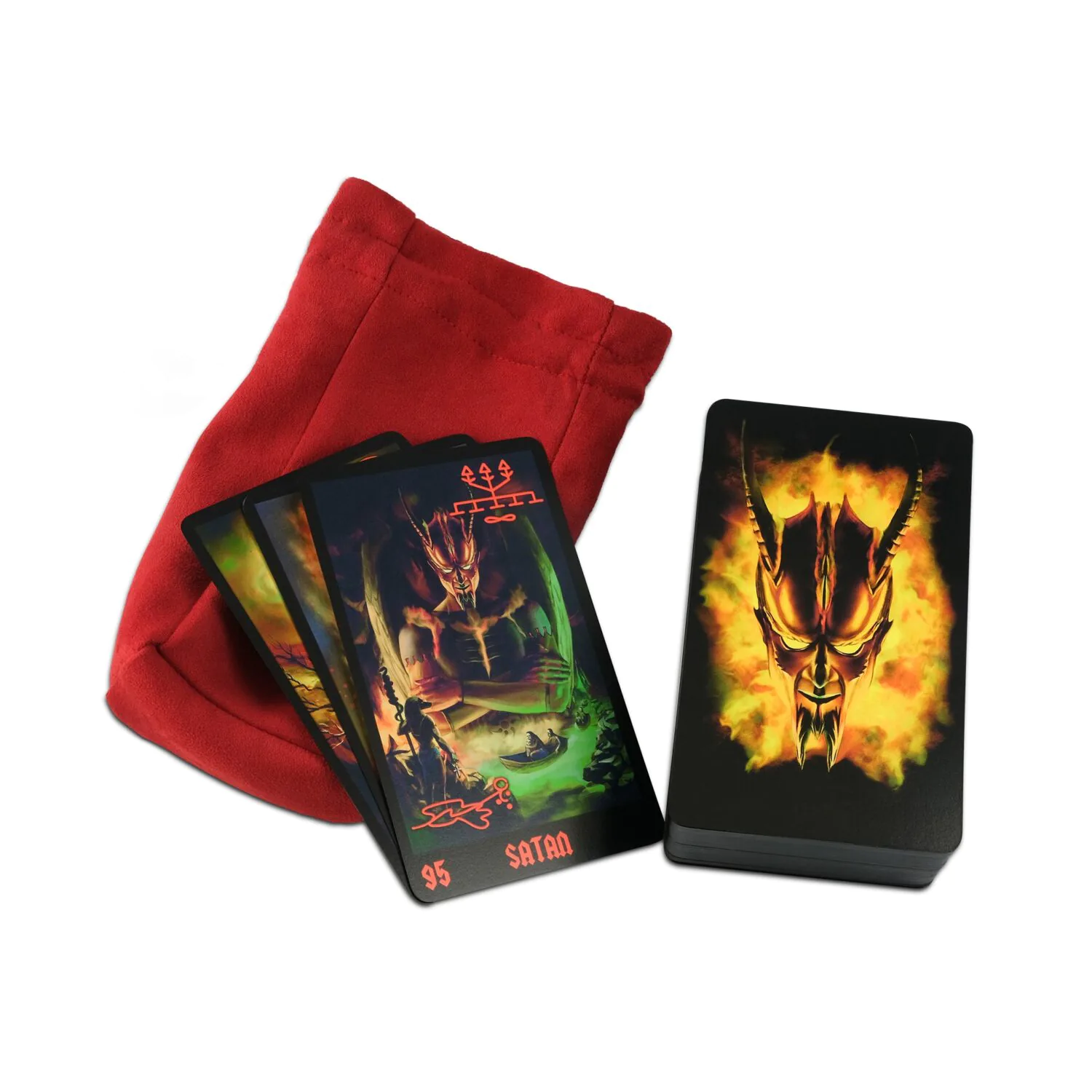
• Tradition: Kabbalah, Demonology.
• Artist: Sergey Krivenchenko
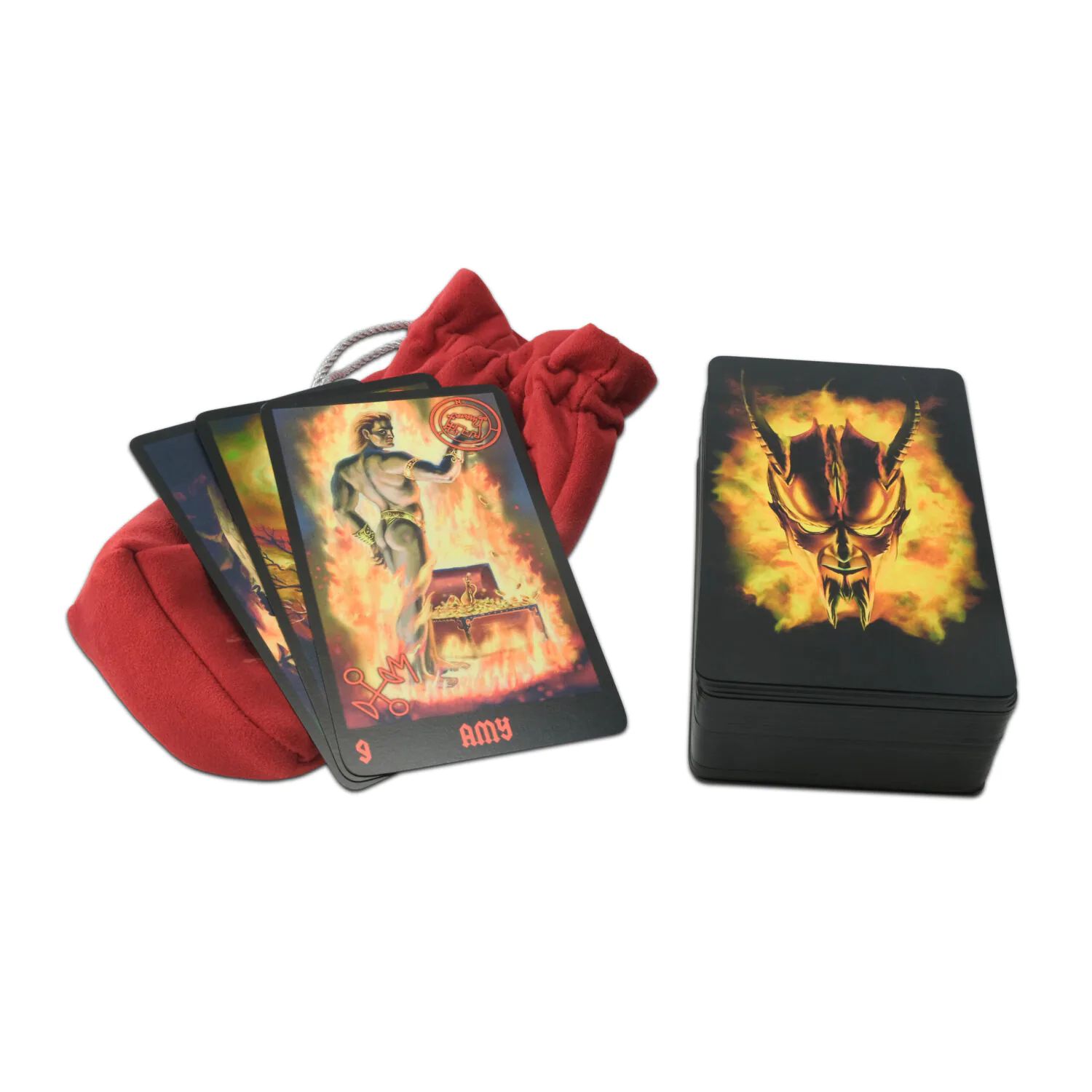
• Package contents: 105 arcana in vacuum packing
+ Book-guide with detailed description
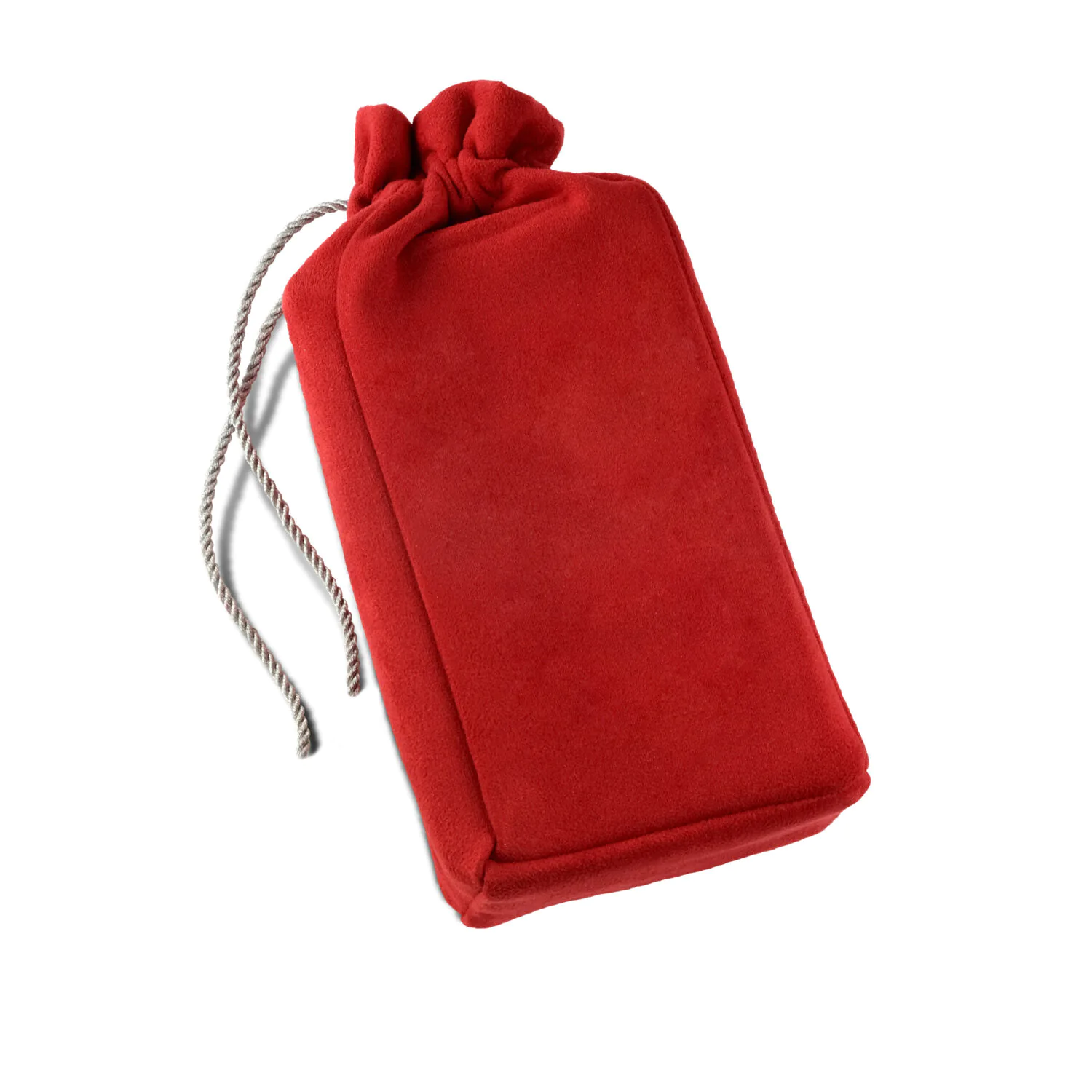
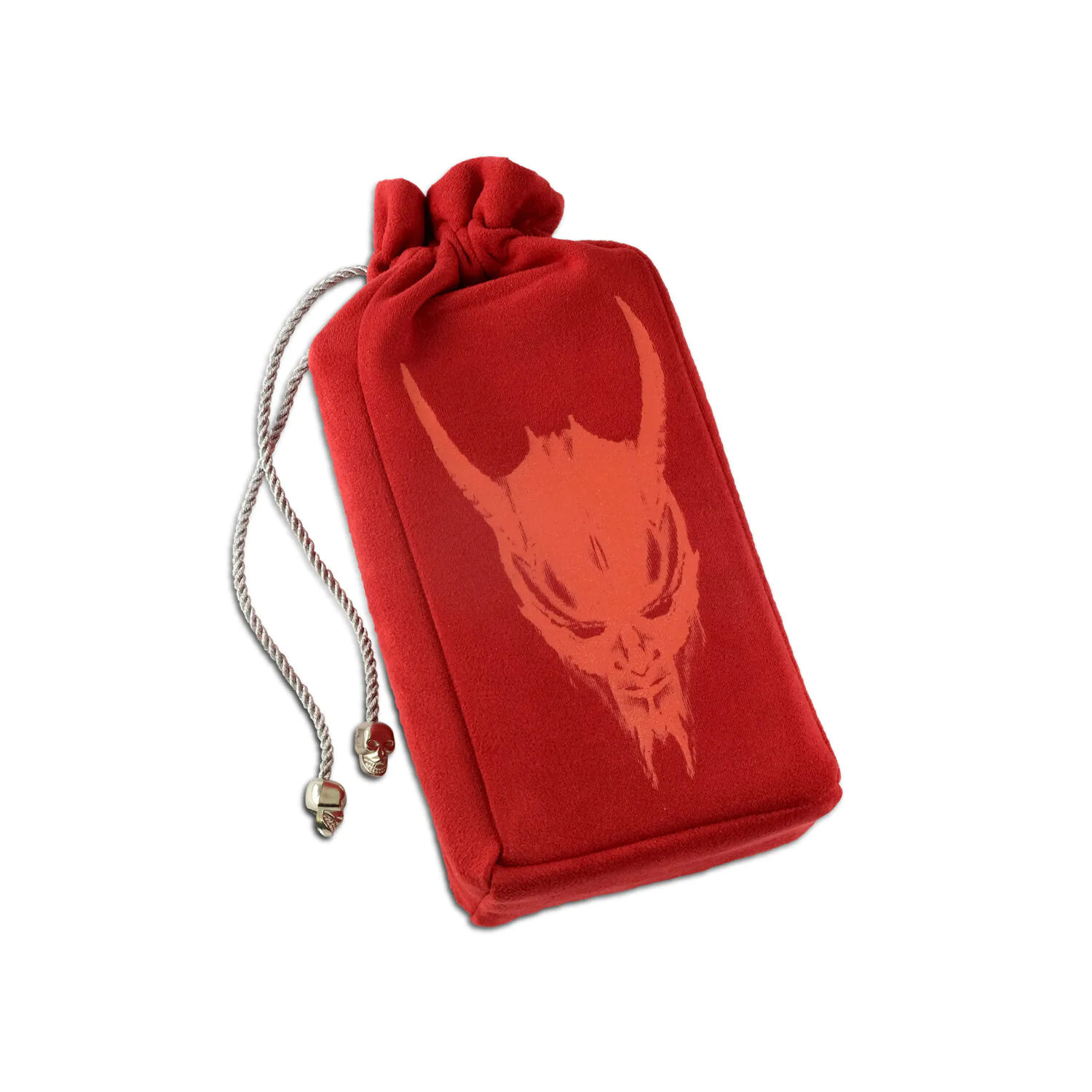
+ Red velvet pouch
• Box size (mm): 180 *130* 70
• Card size (mm): 150*90
• All cards have rounded edges
• Material: special thick cardboard
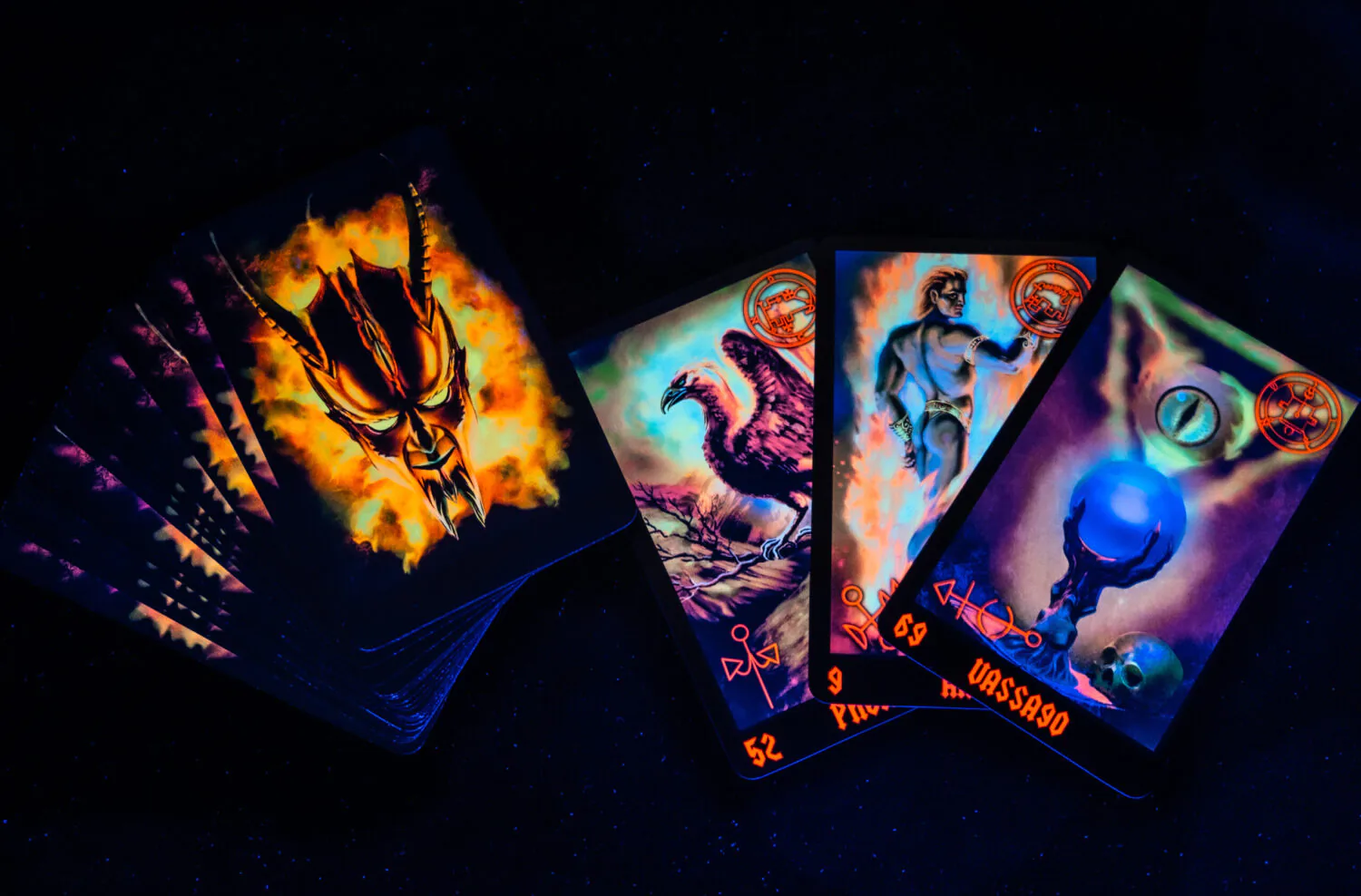
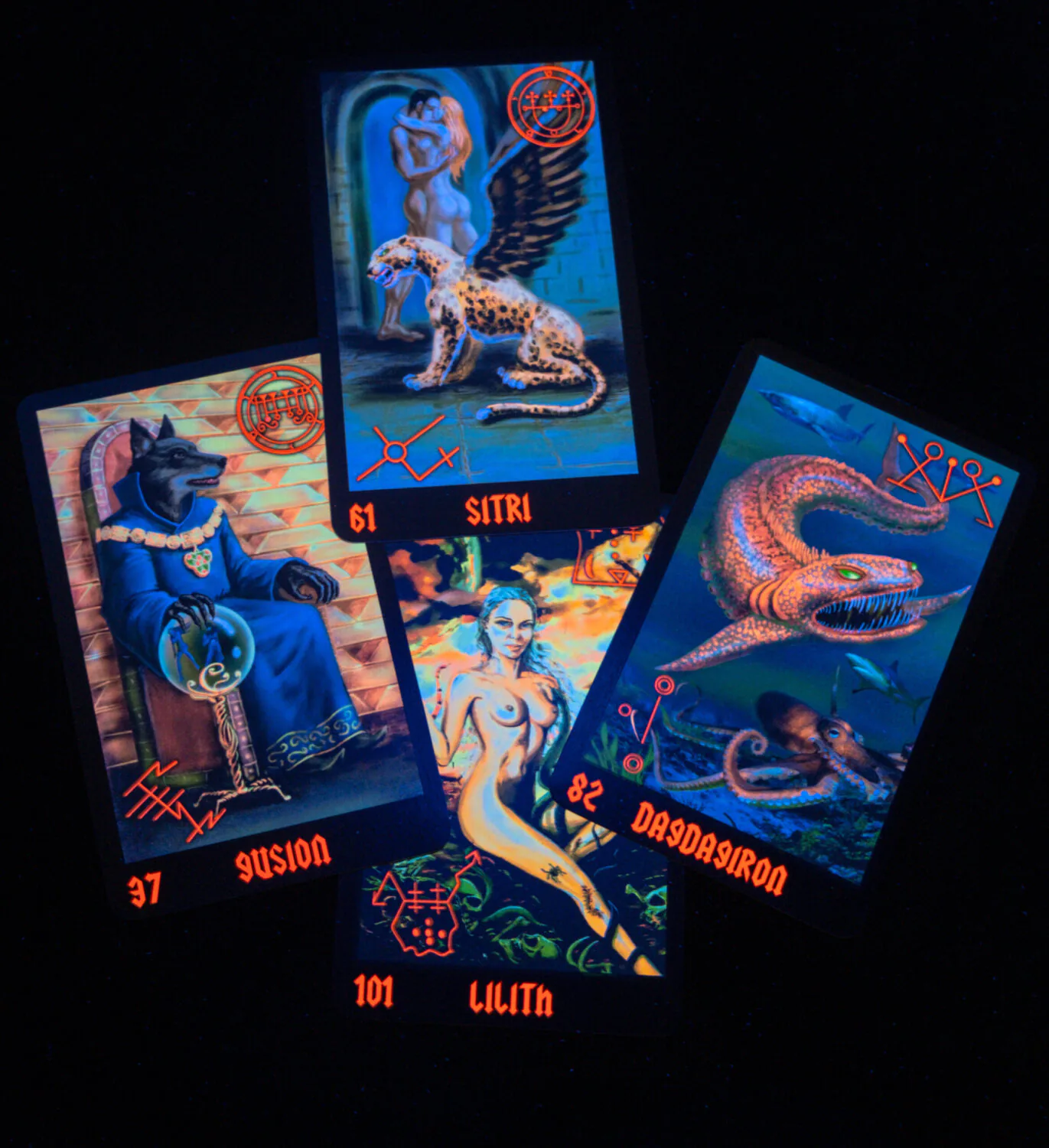
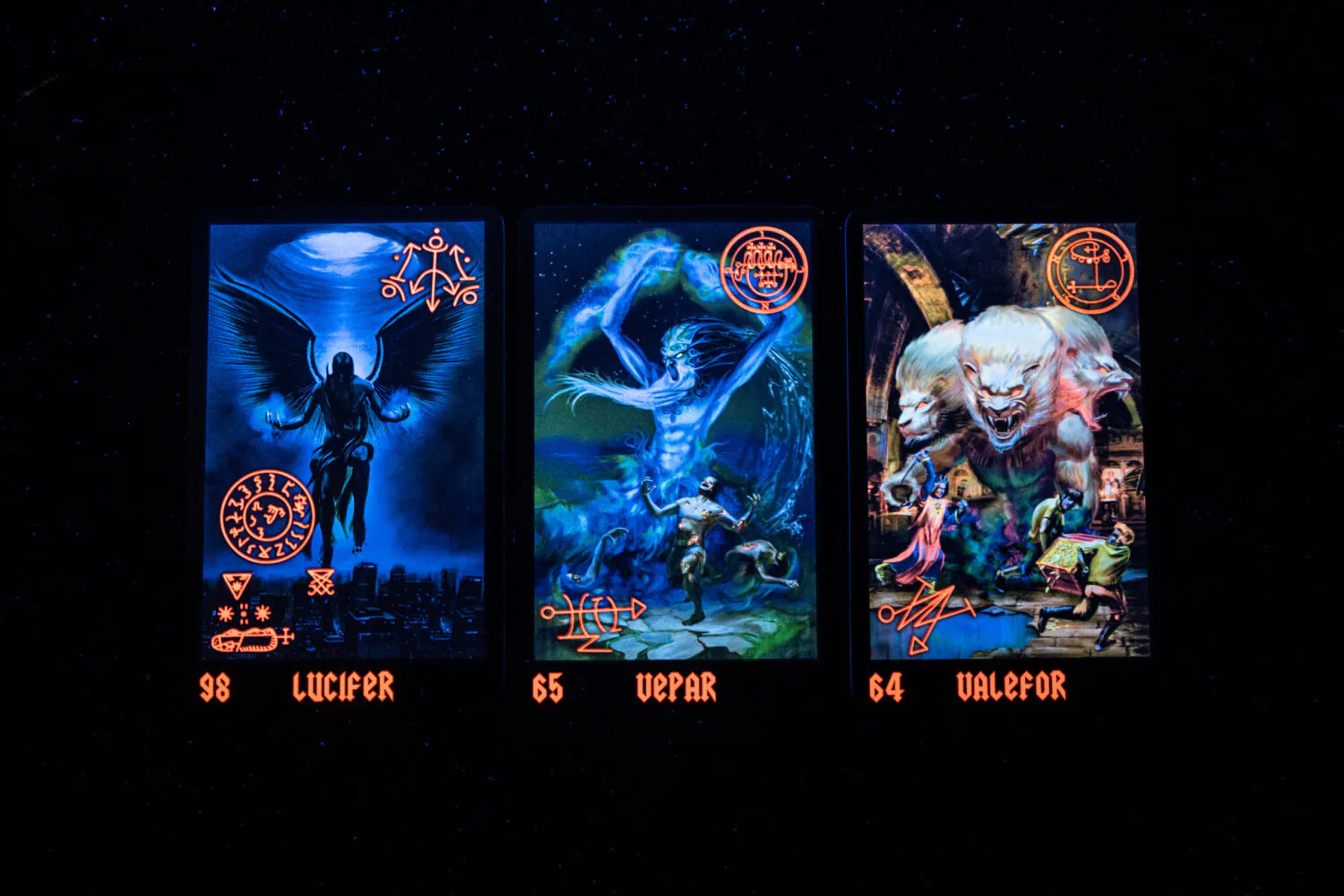
• Special Effect: The cards are coated with fluorescent paint, making the cards glow in the dark under ultraviolet light.
• language: Russian, English
• Producer: DeLuxe, Odessa, Ukraine.
• ISBN: 9789669686961
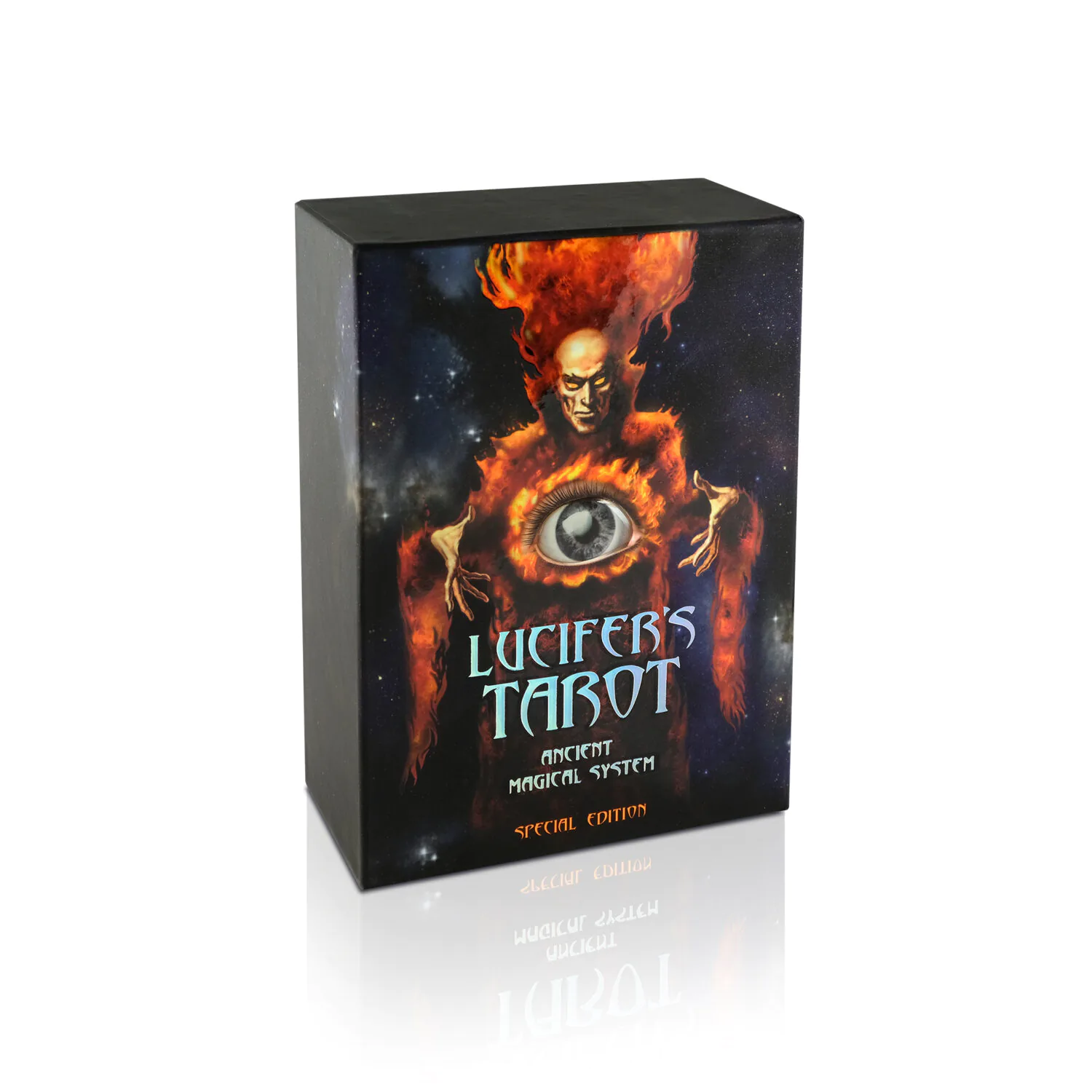
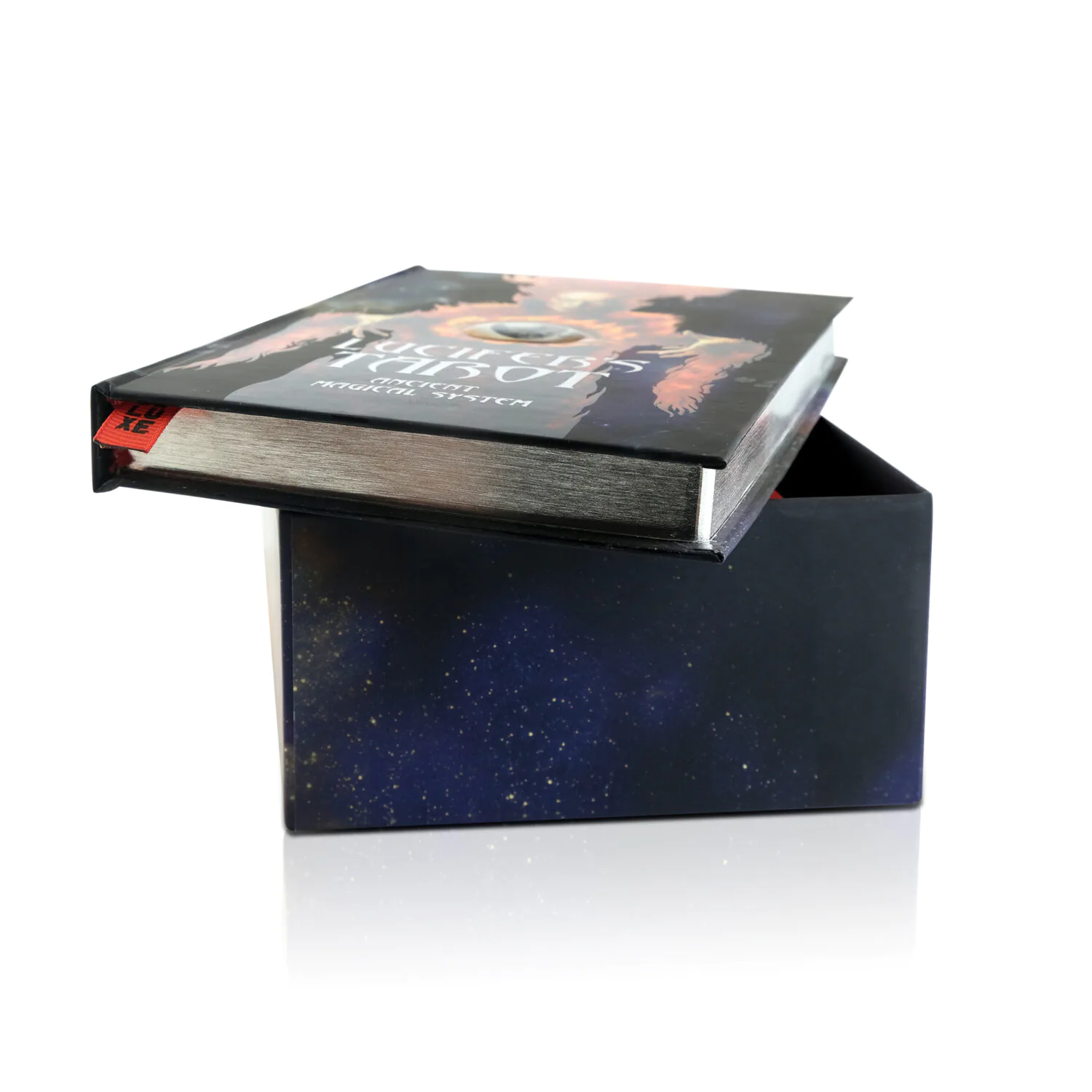
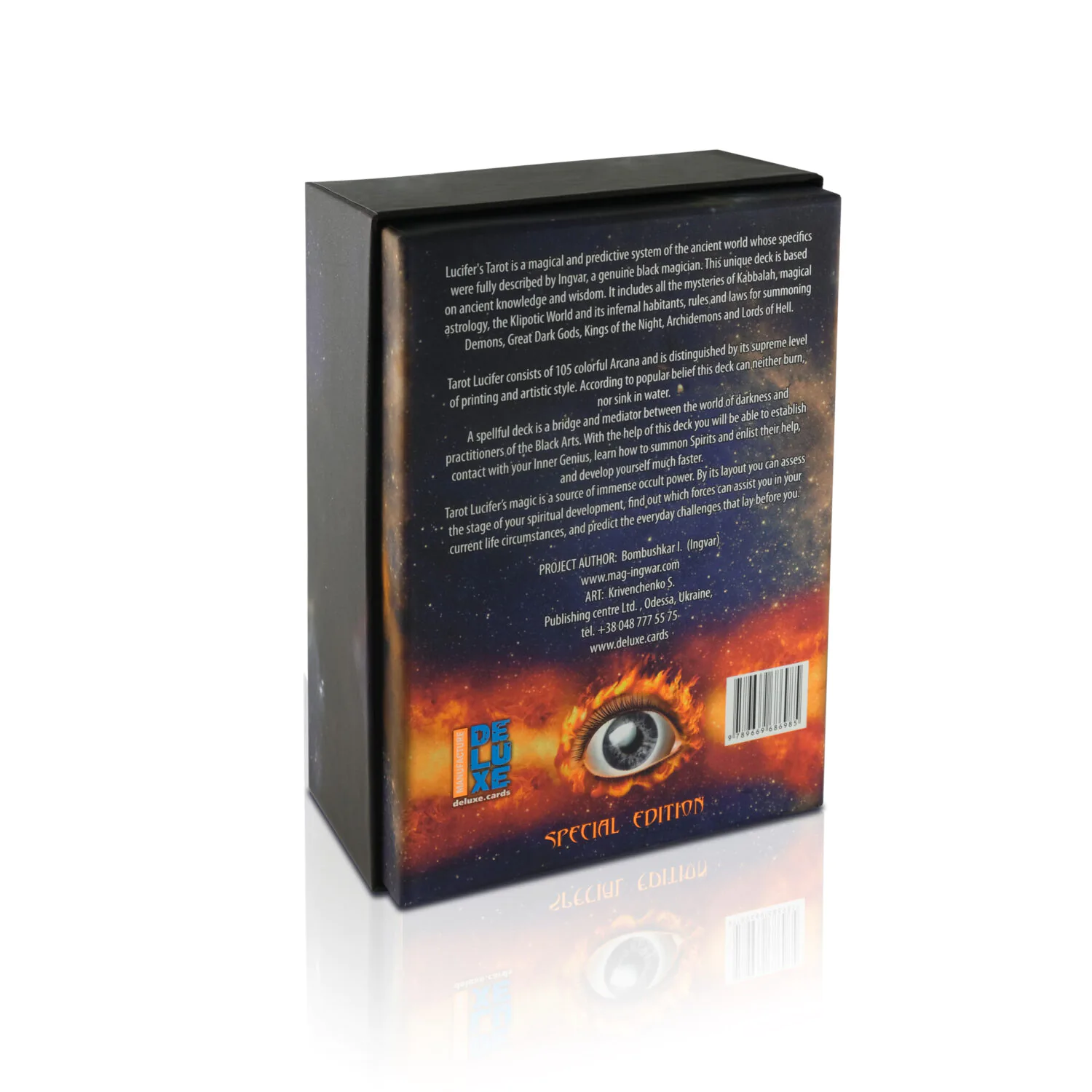
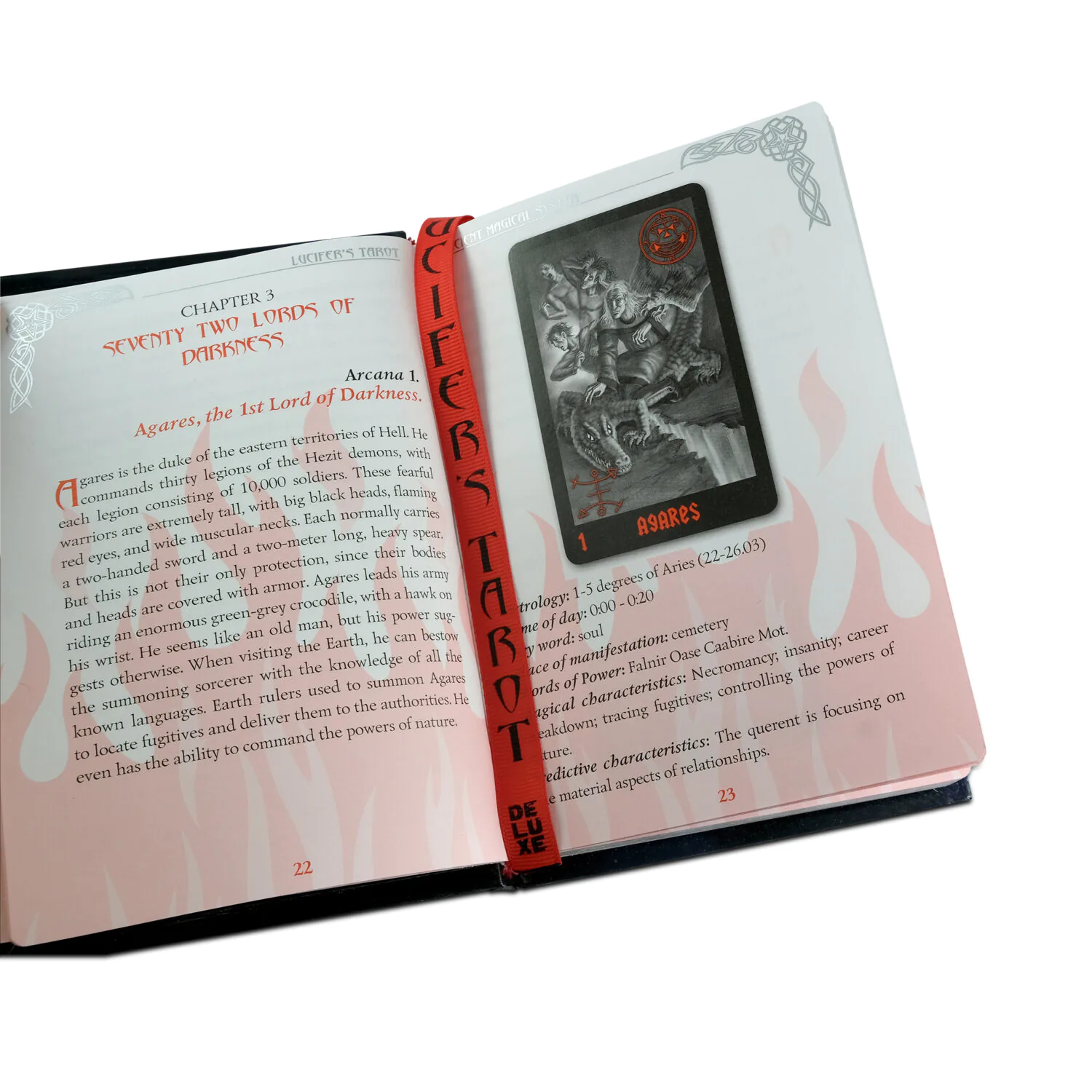
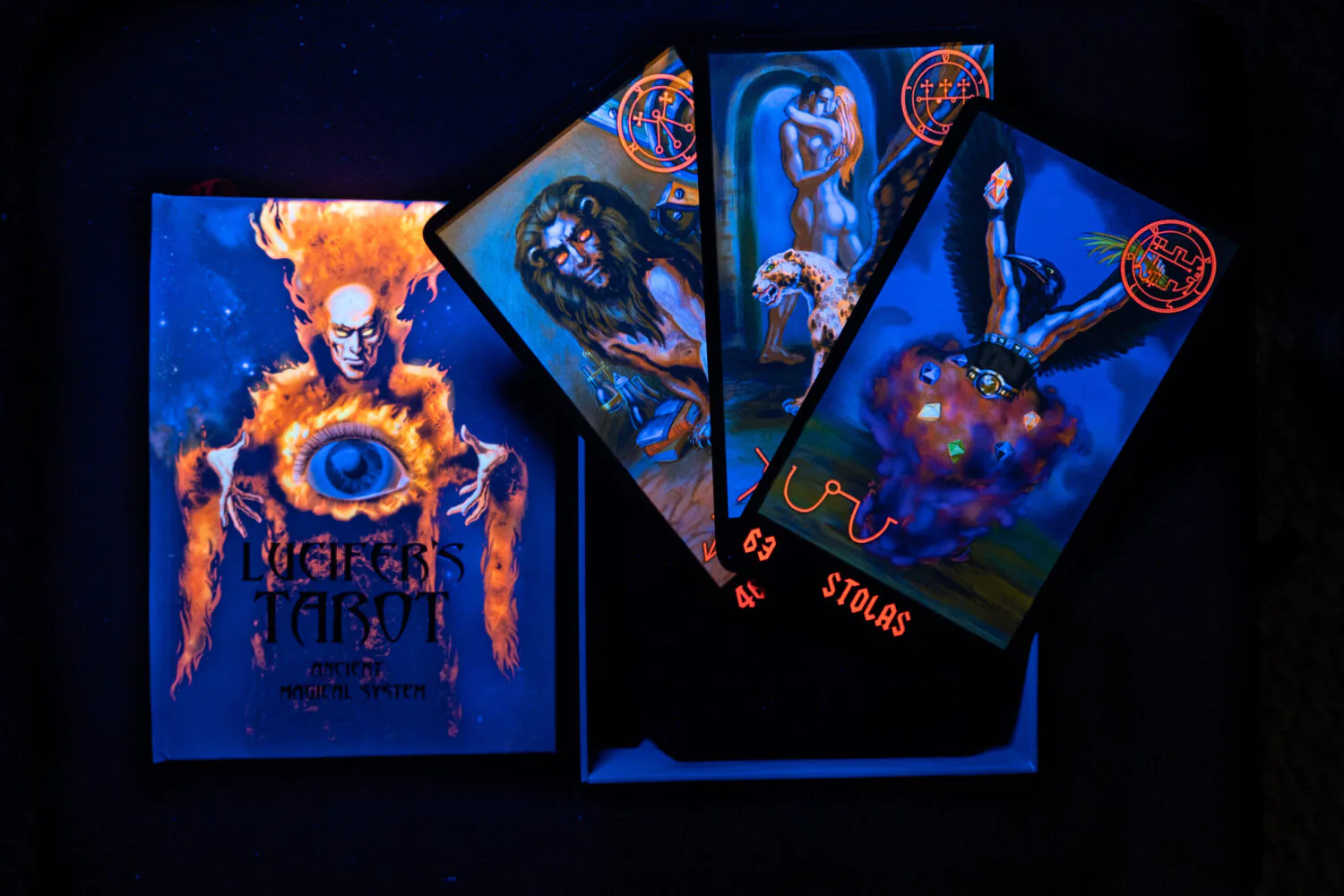
• Tradition: Kabbalah, Demonology.
• Artist: Sergey Krivenchenko
• Package contents: 105 arcana in vacuum packing
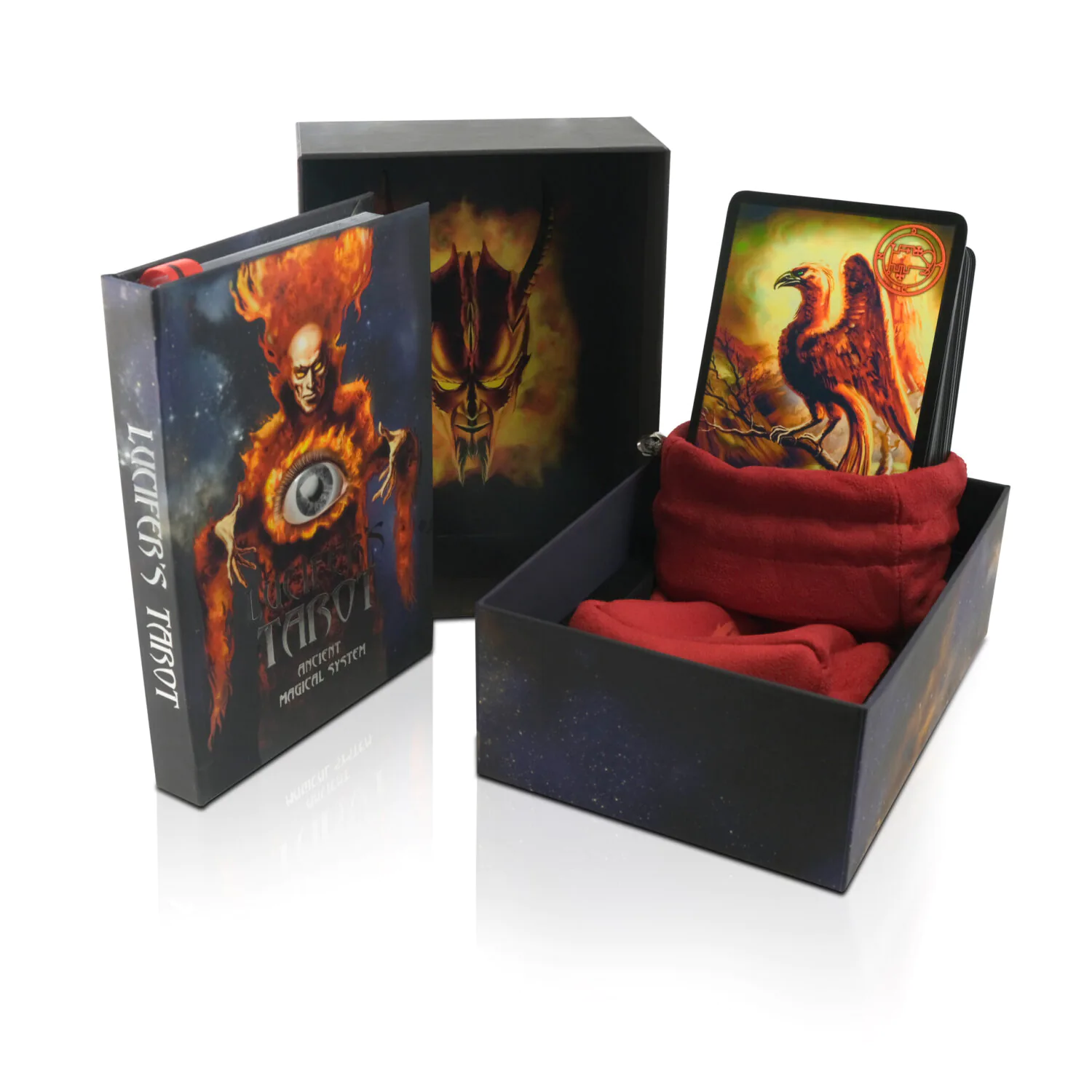
+ Guide book with detailed description, stylized fire pages with silver cut, stylish bookmark)
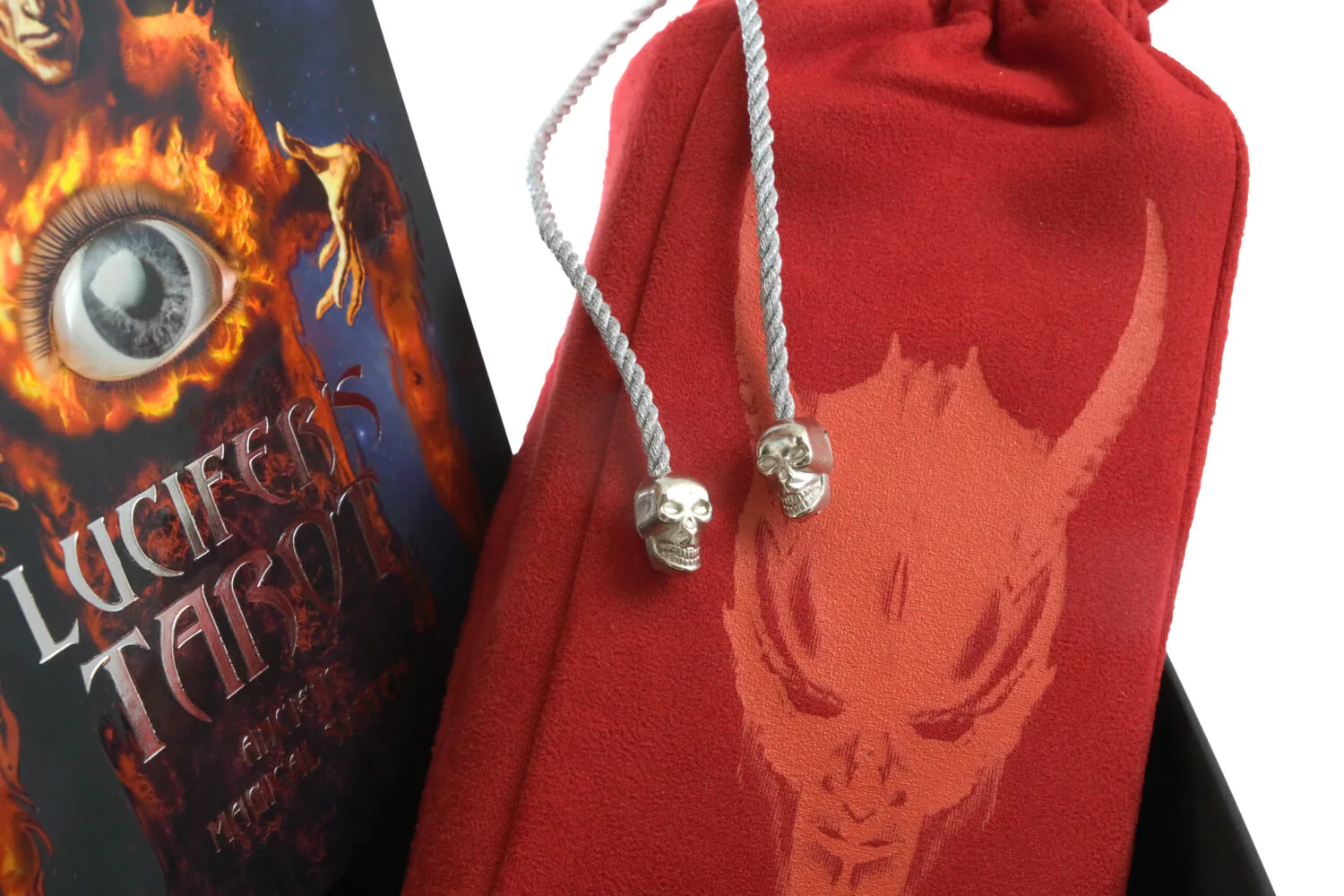
+ Red velvet bag with the face of Lucifer
• Box size (mm): 180*130*70
• Card size (mm): 150*90
• All cards have rounded edges, sealed with a special plastic coating, black cut.
• Material: special thick cardboard
• Special Effect: The cards are coated with fluorescent paint, making the cards glow in the dark under ultraviolet light.
• language: English
• Producer: DeLuxe, Odessa, Ukraine.
• ISBN: 9789669686985
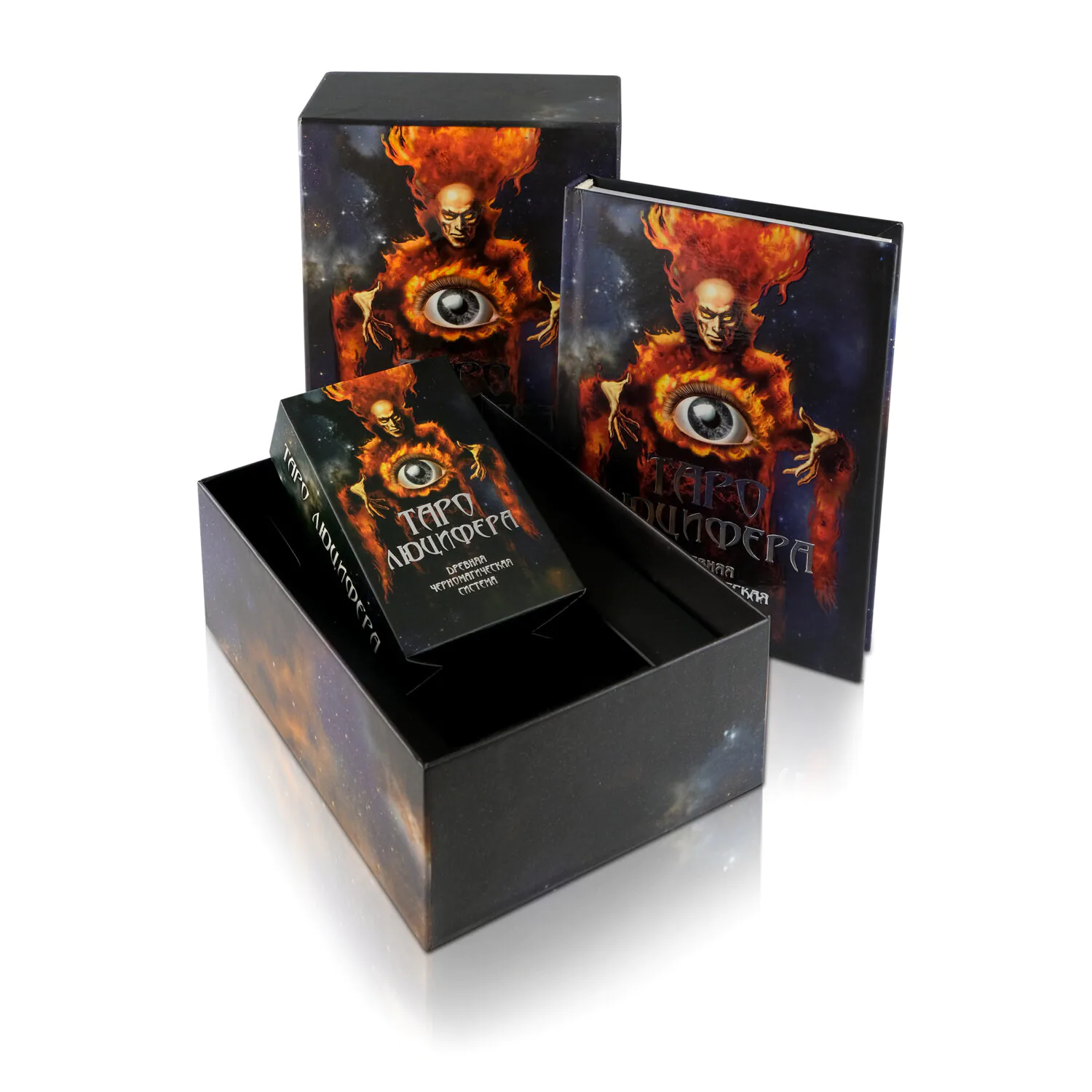
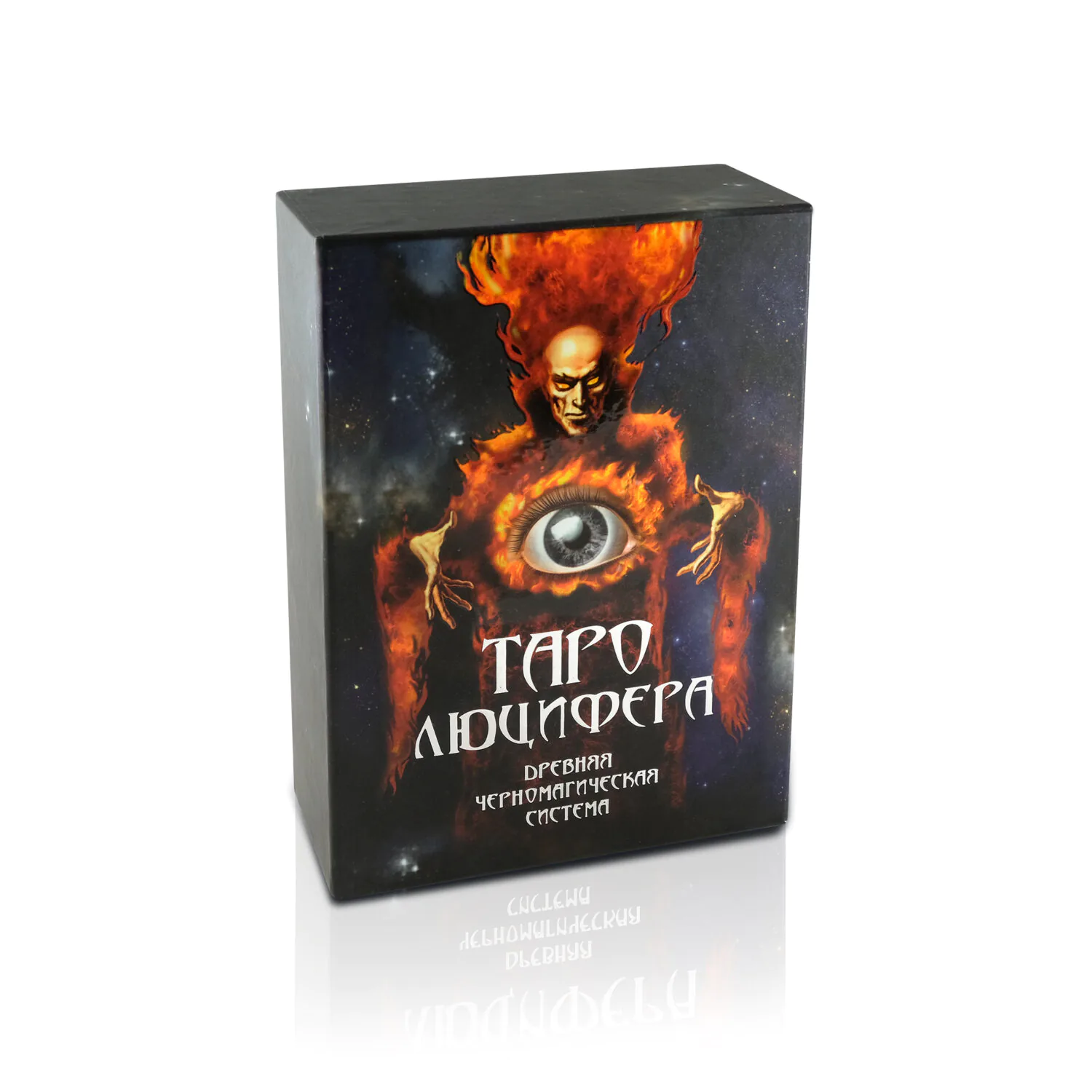
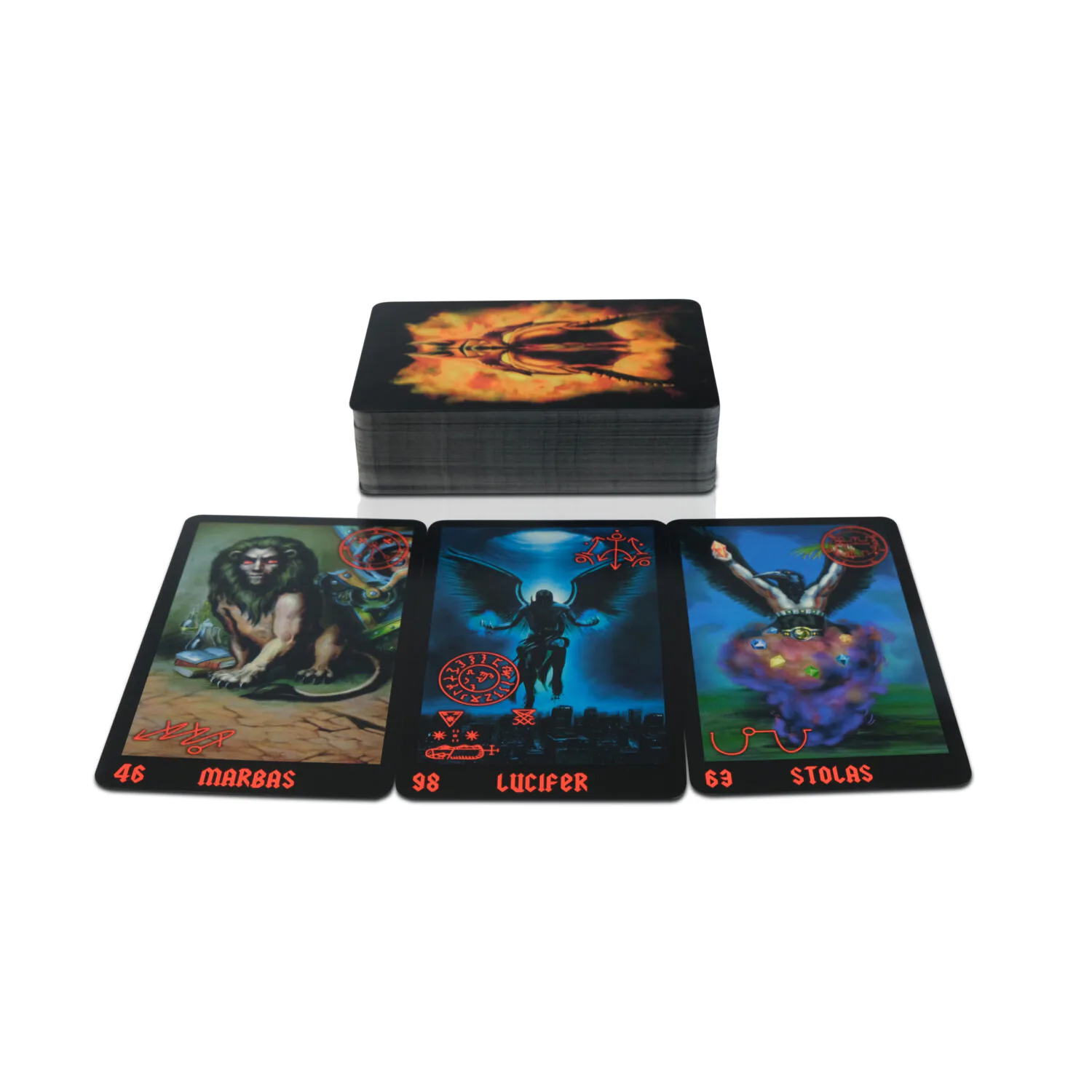
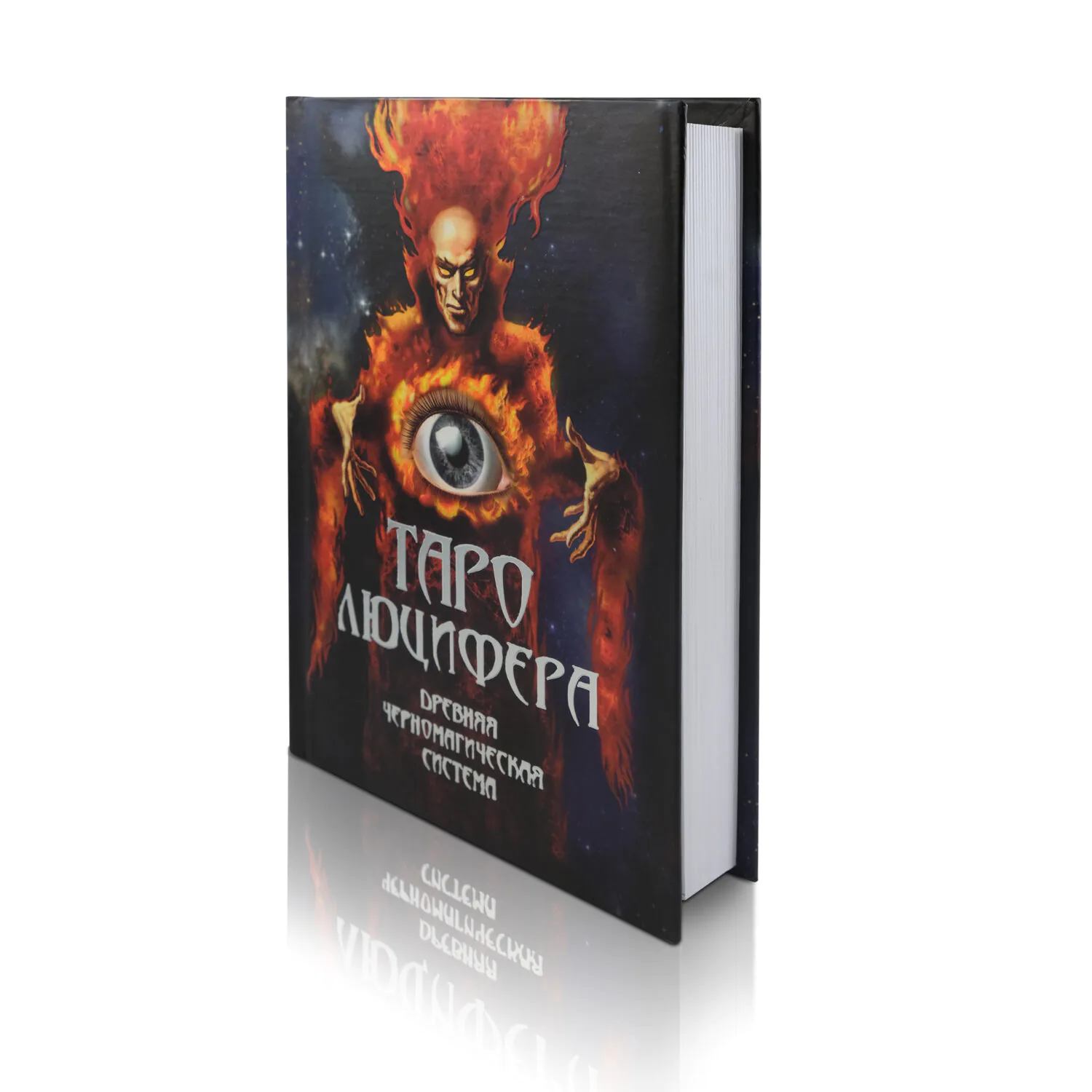
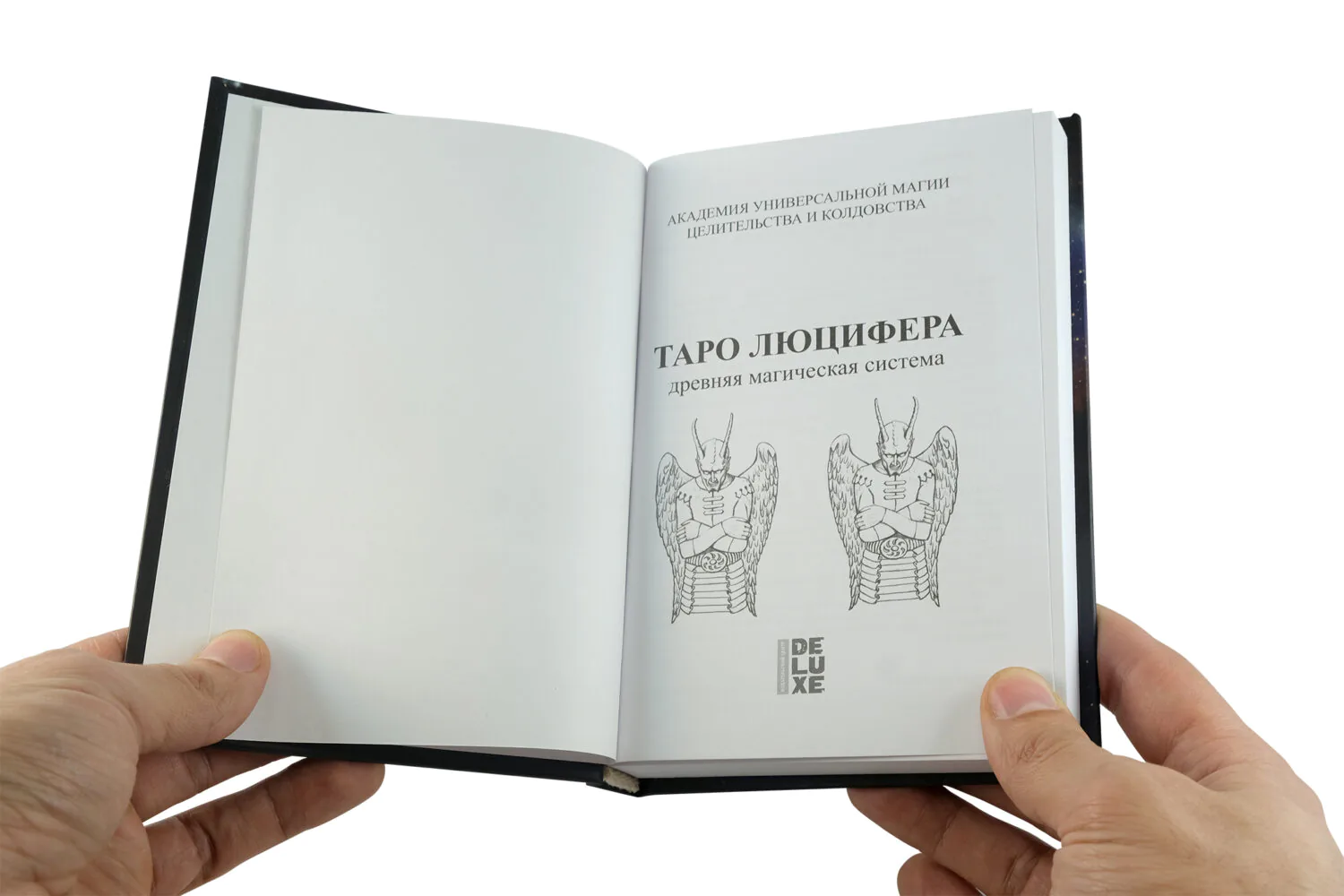
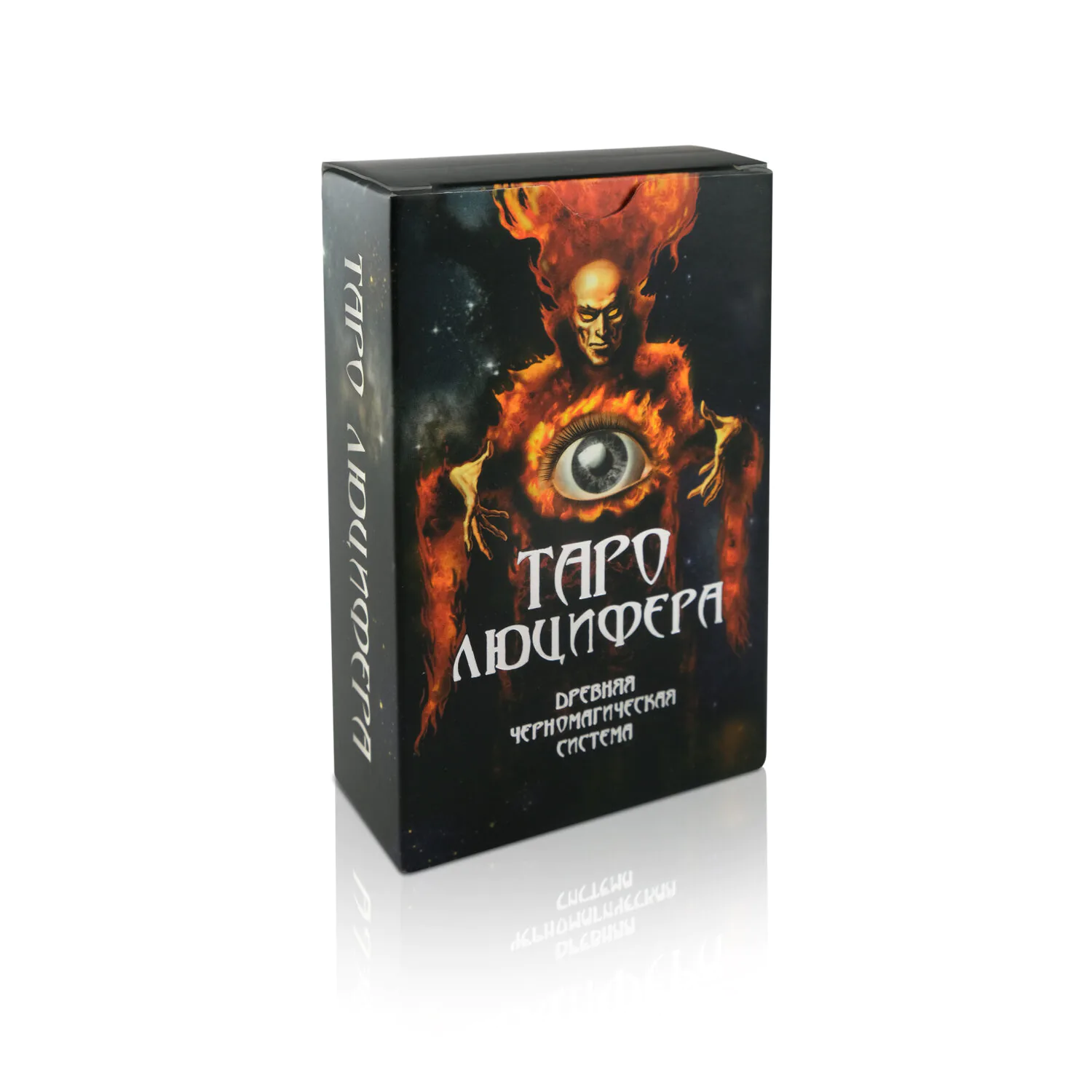
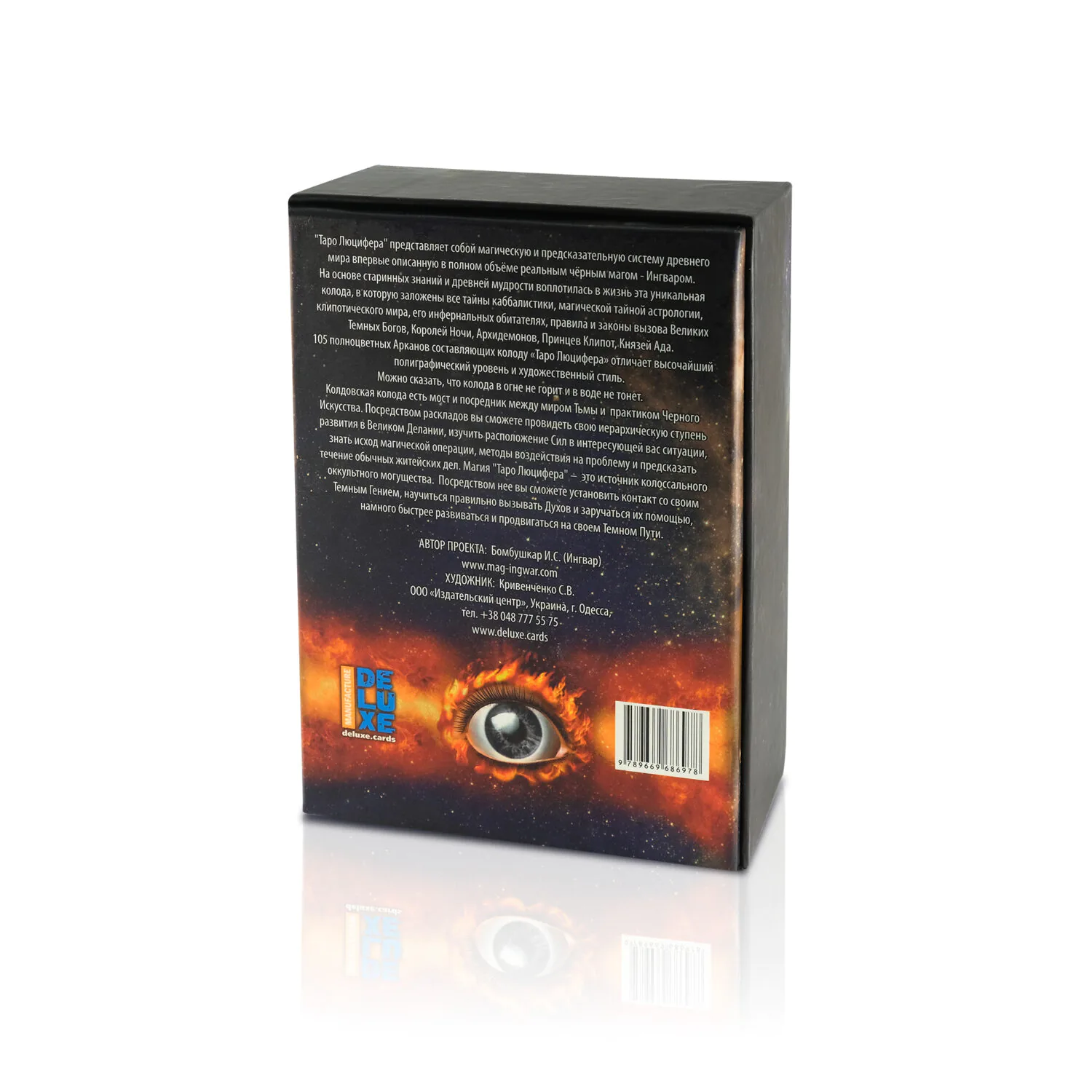
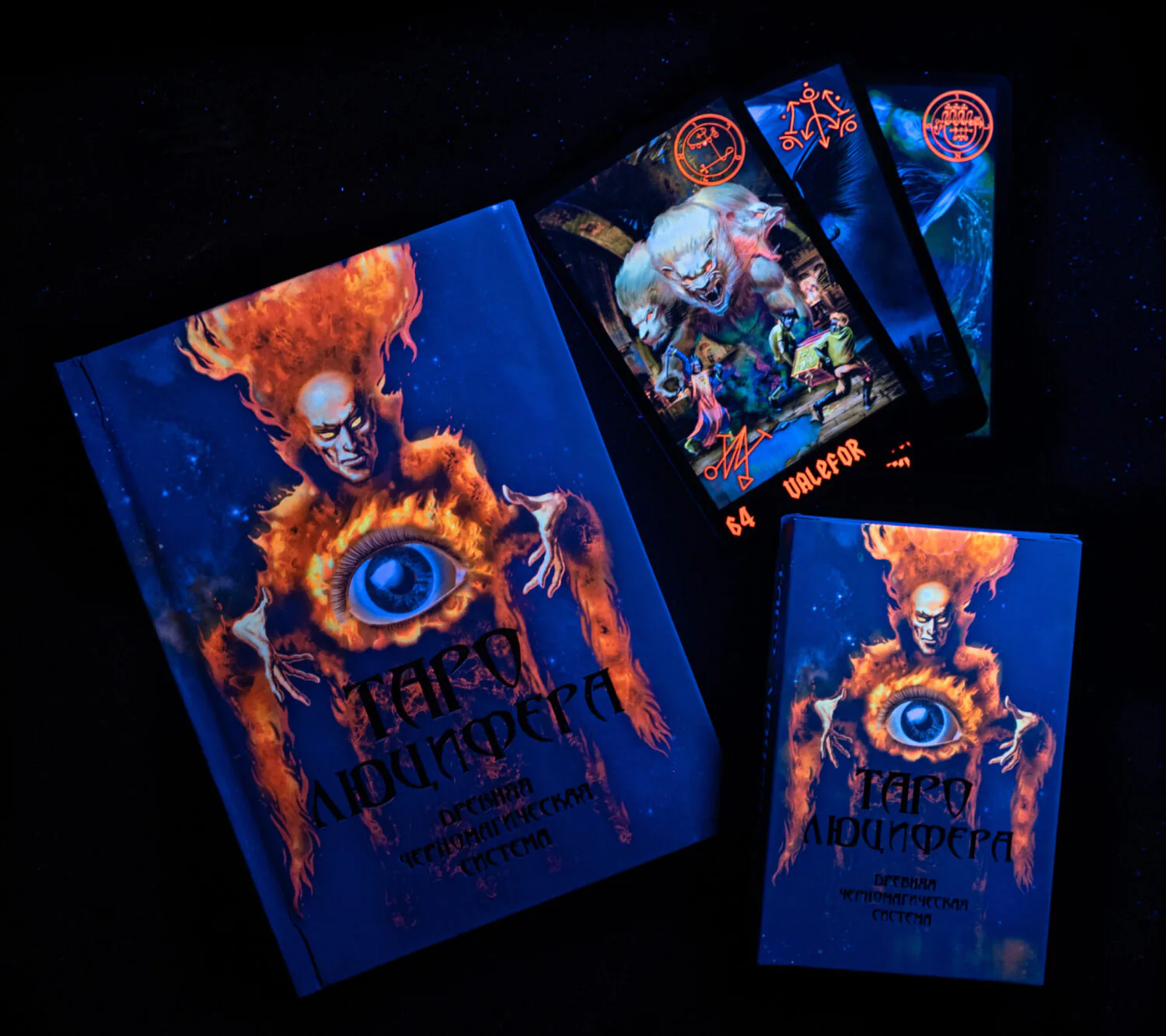
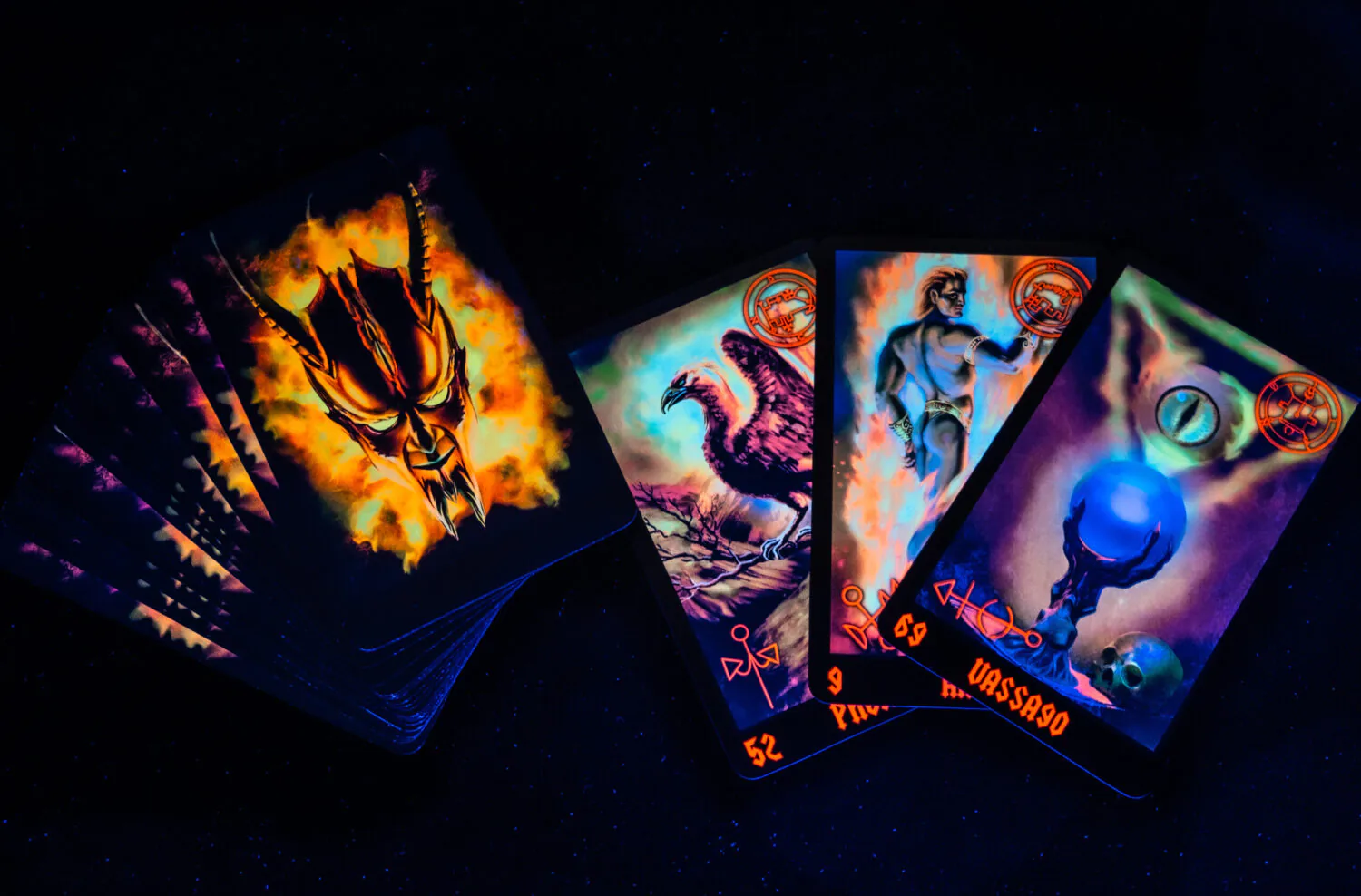
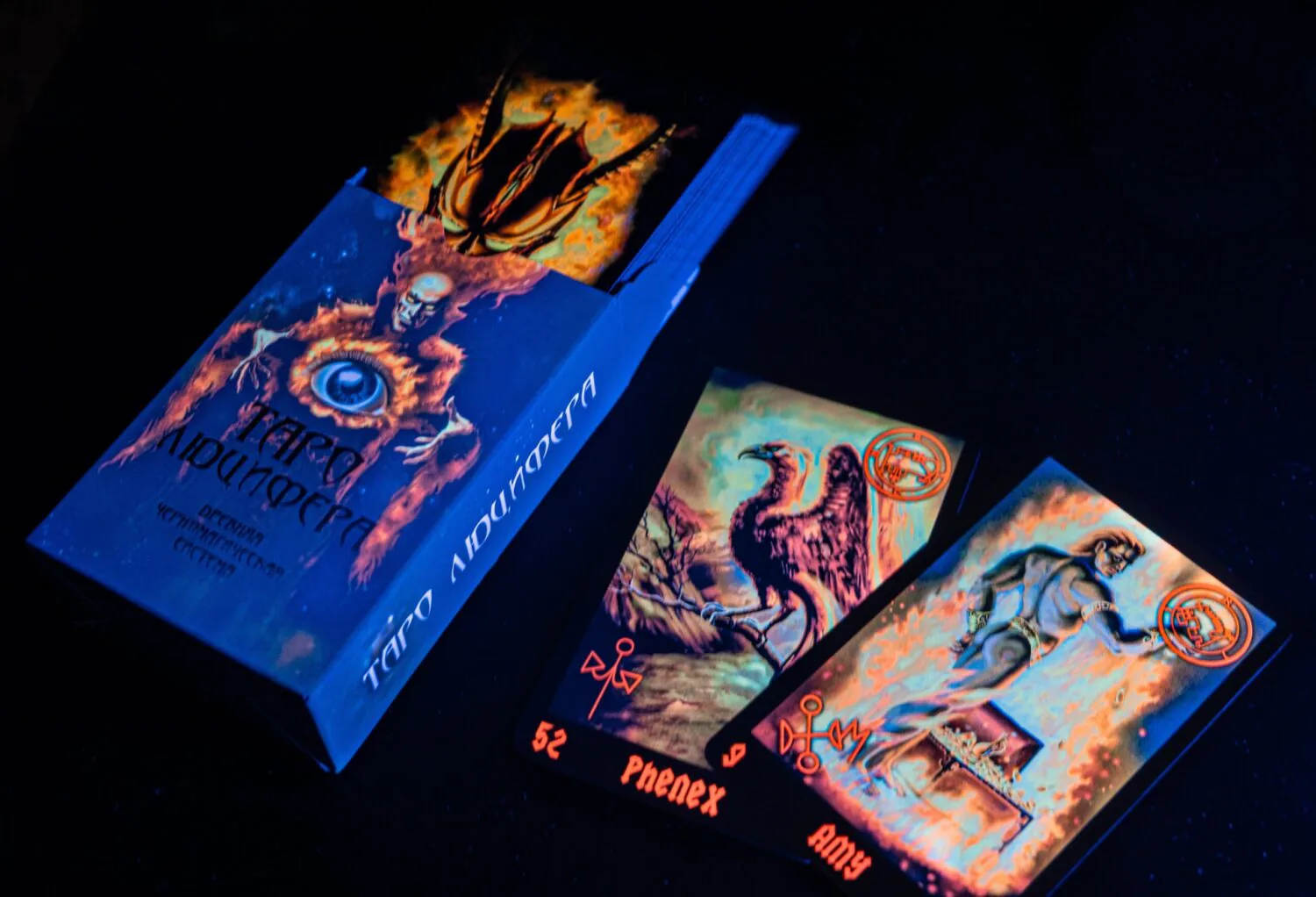
• Tradition: Kabbalah, Demonology.
• Artist: Sergey Krivenchenko
• Complete set: 105 arcana in vacuum packing and special box according to the size of the cards.
+ Book-guide with a detailed description
• Box size (mm): 180*130*70
• Card size (mm): 110*70
• All cards have rounded edges
• Material: special thick cardboard
• Special Effect: The cards are coated with fluorescent paint, making the cards glow in the dark under ultraviolet light.
• language: Russian, English
• Producer: DeLuxe, Odessa, Ukraine.
• ISBN: 9789669686978
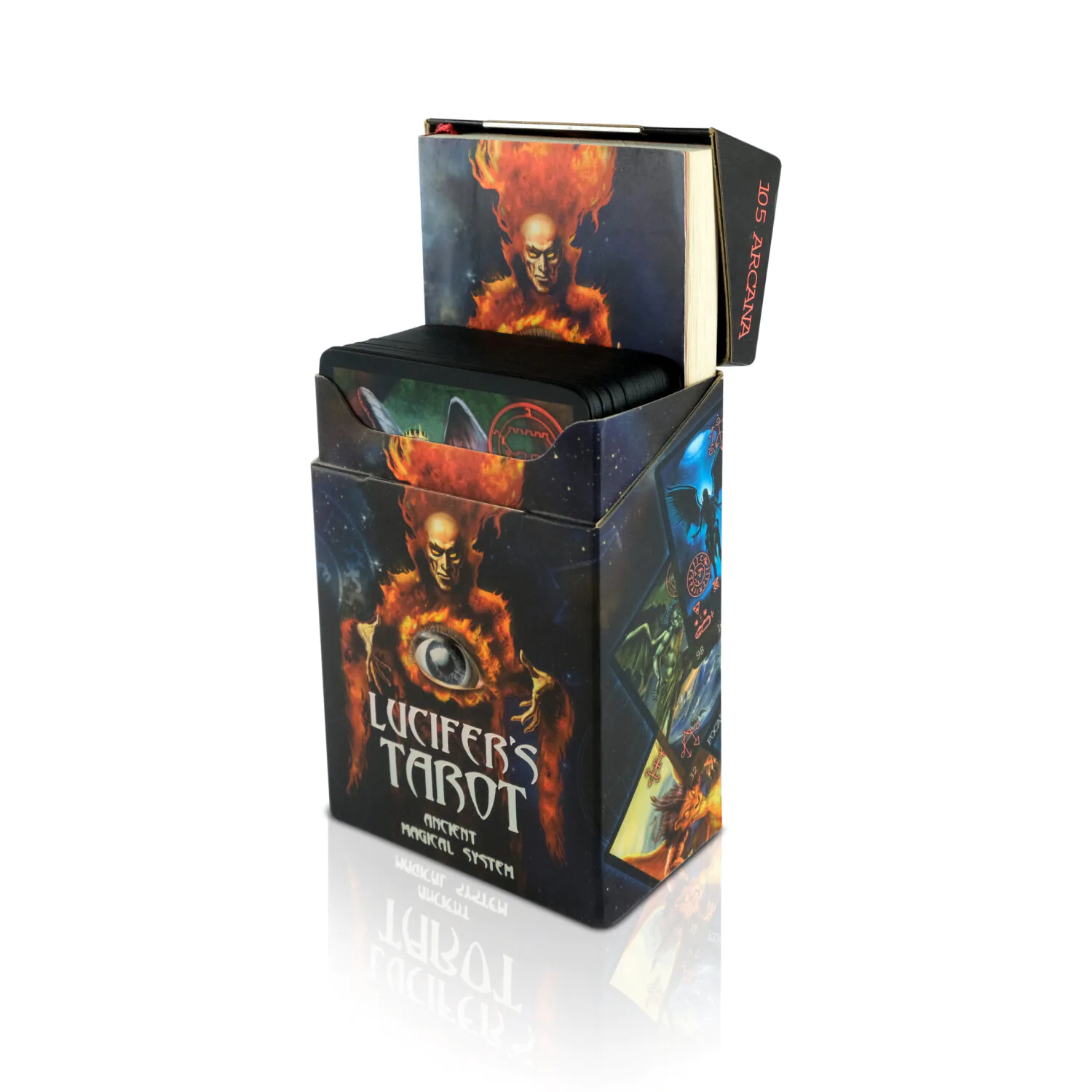
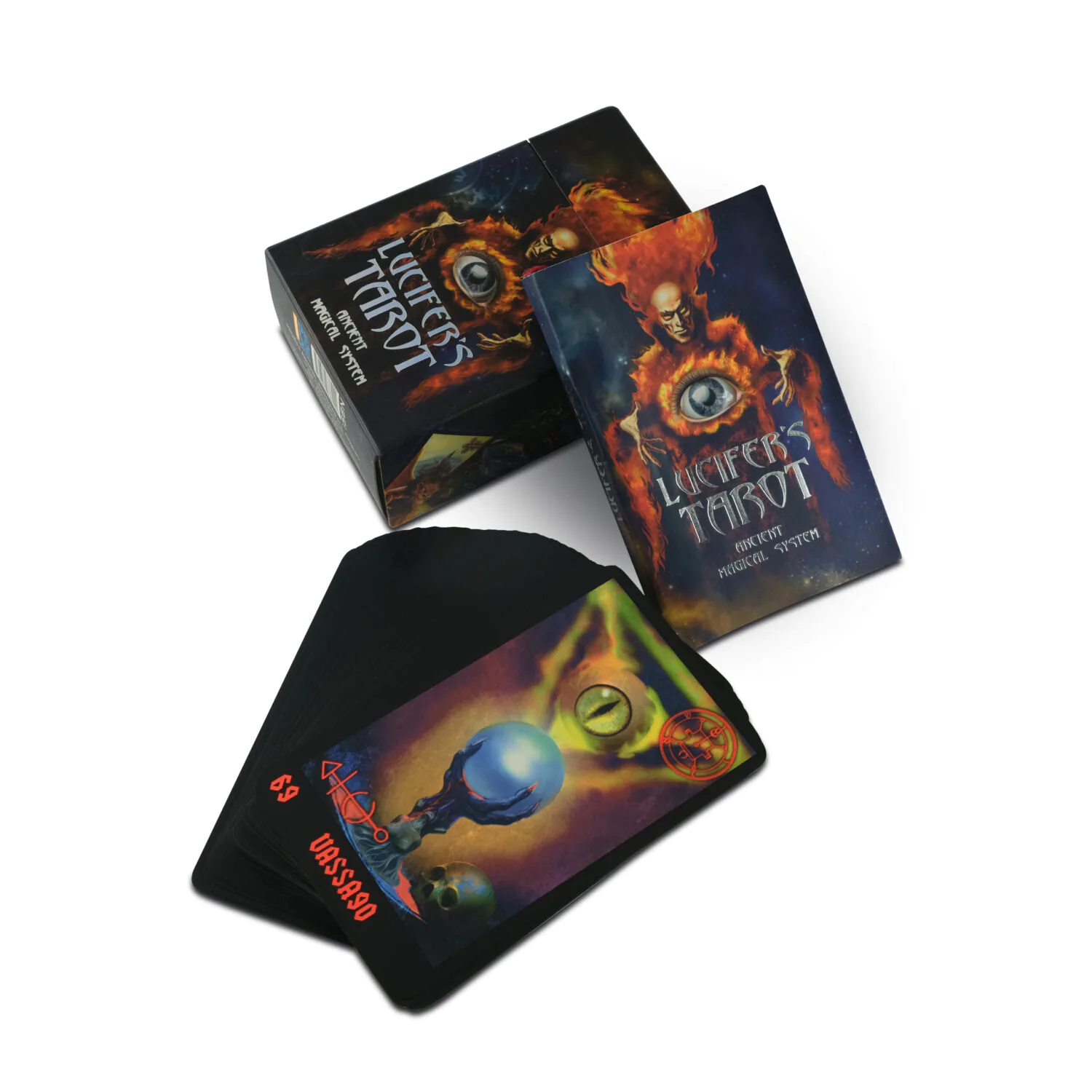
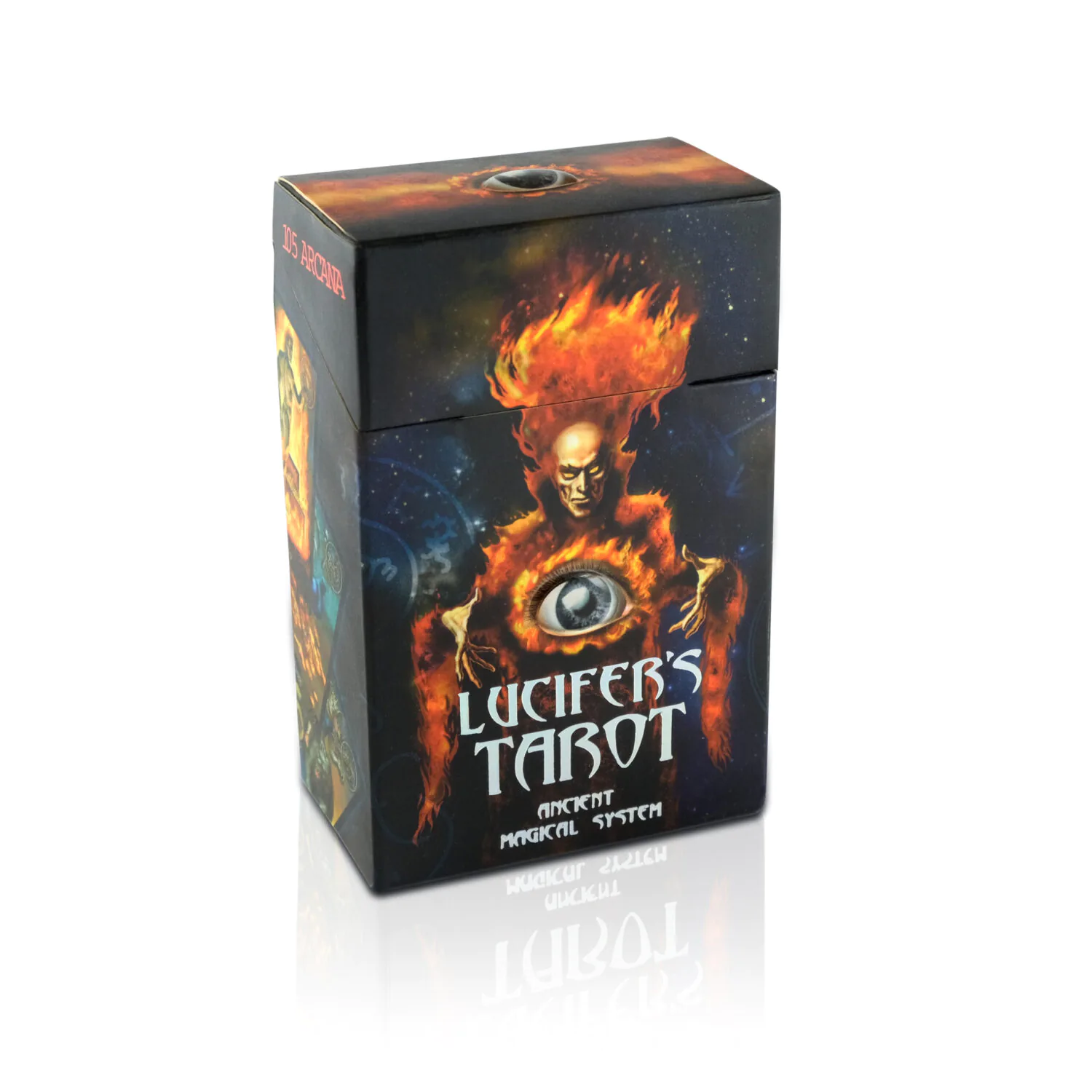
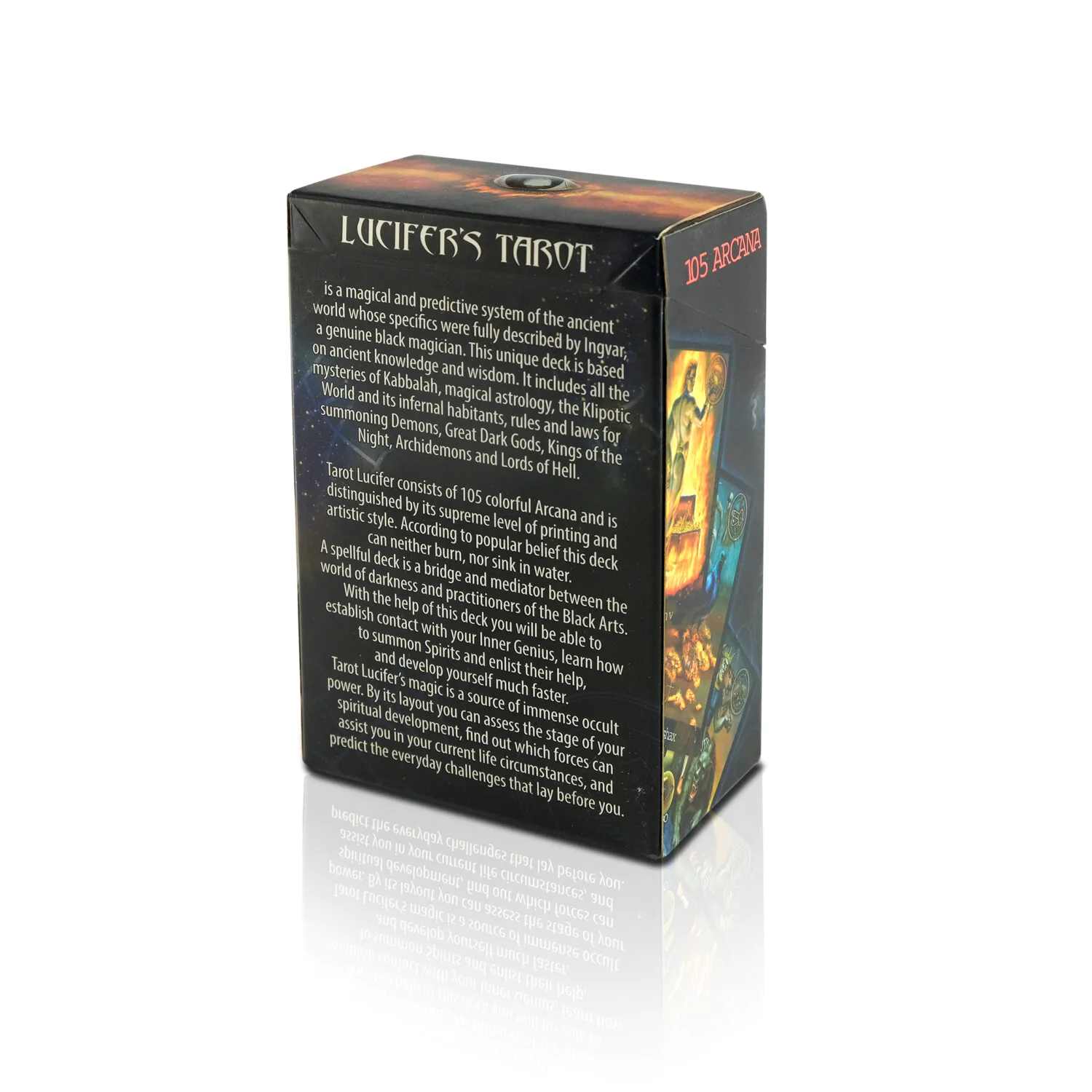
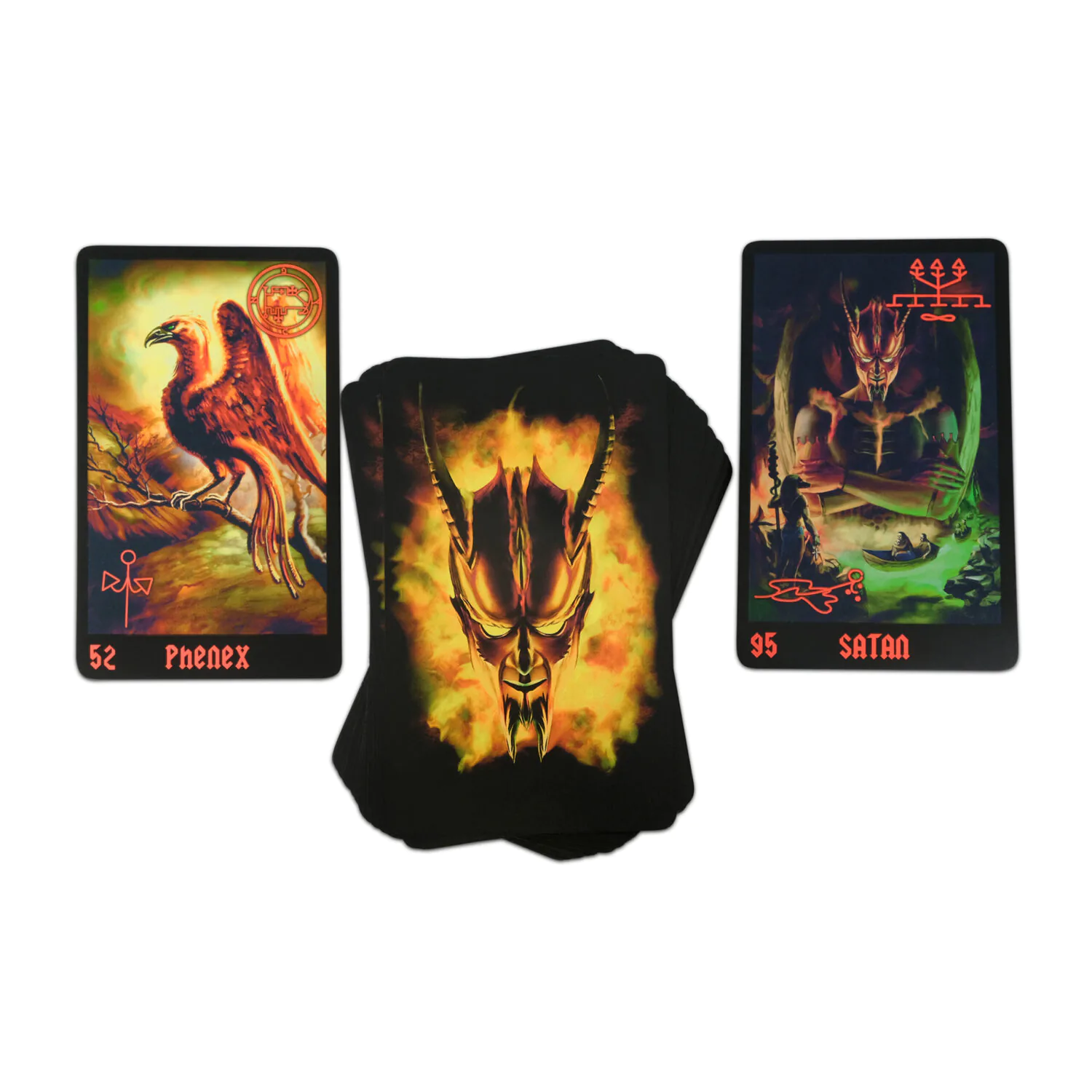
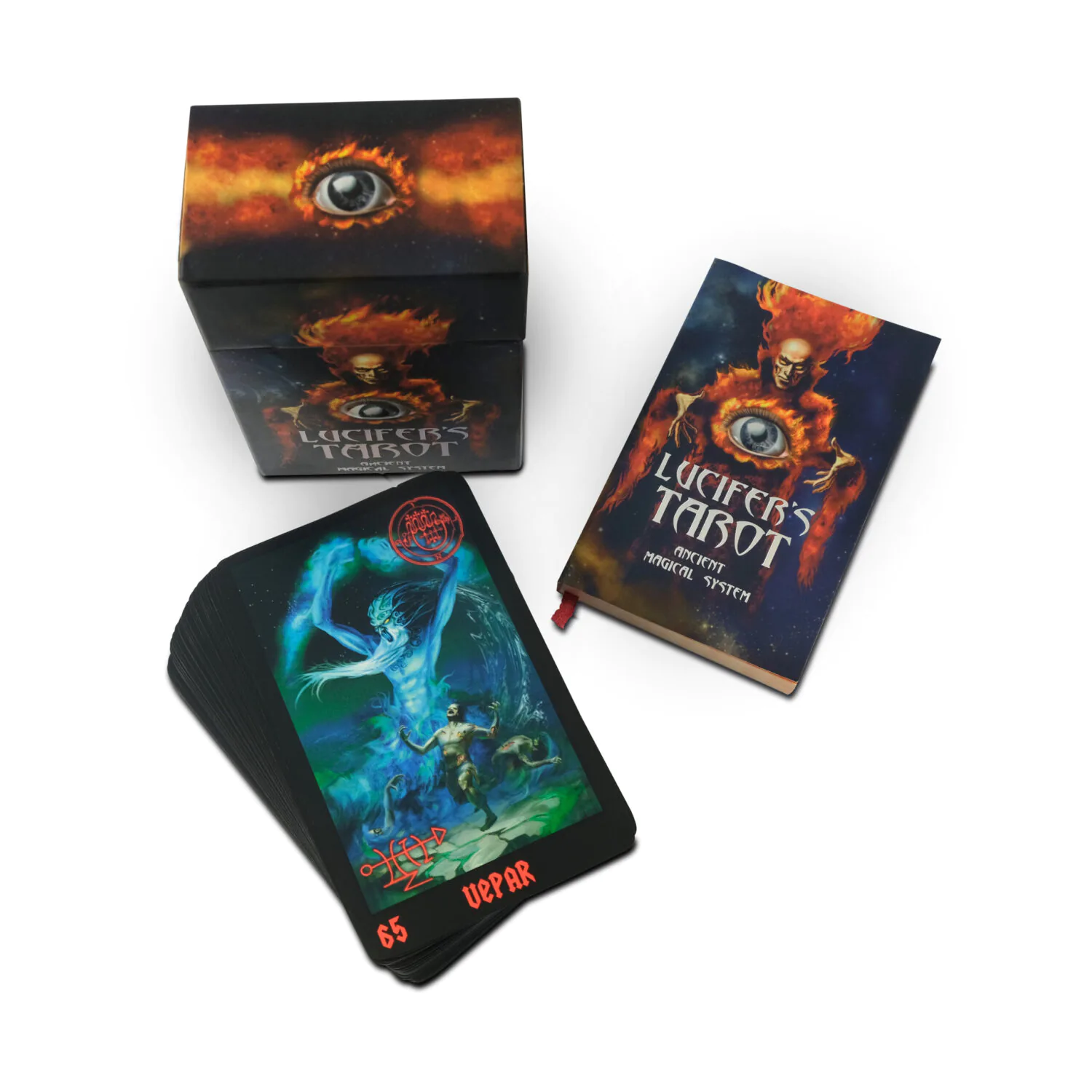
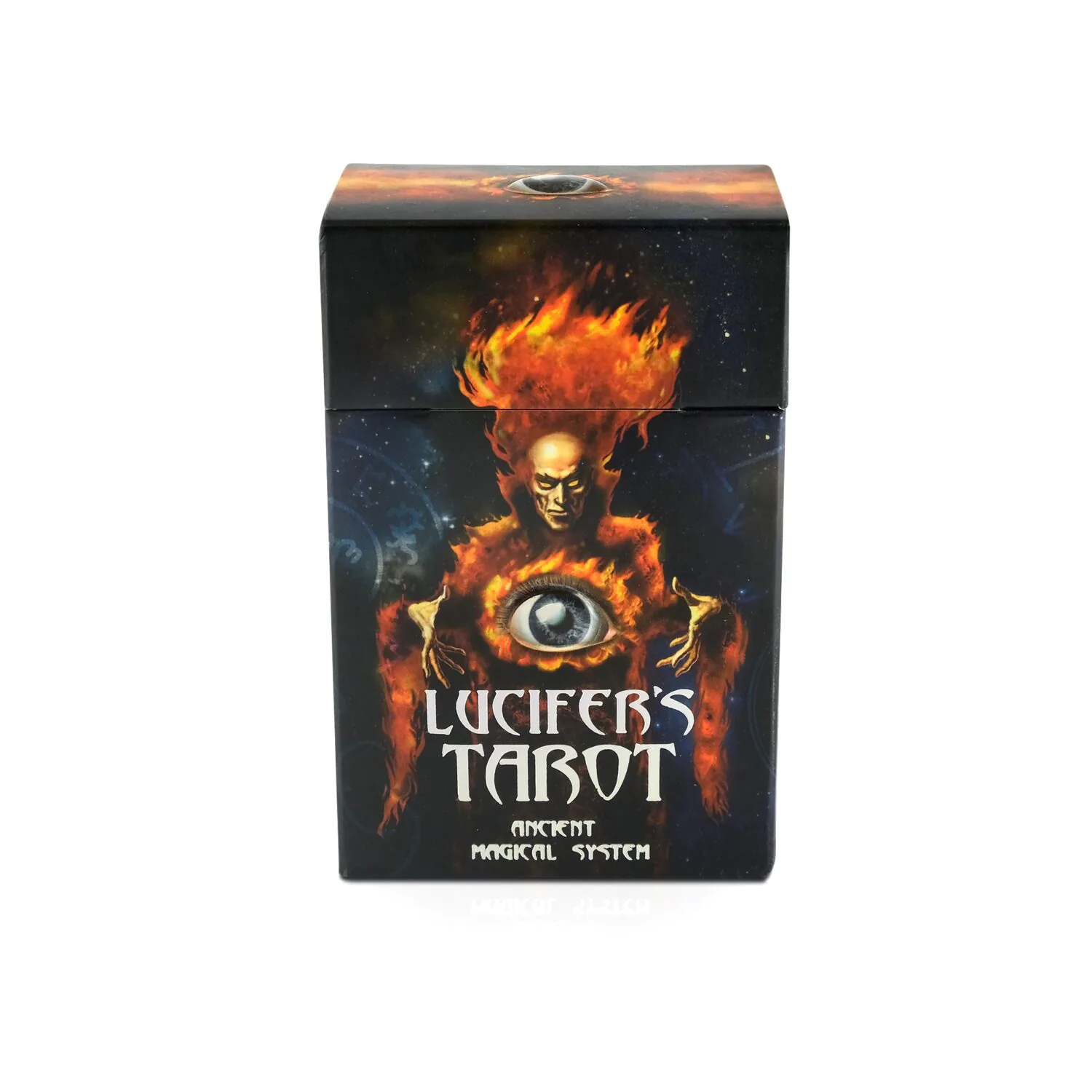
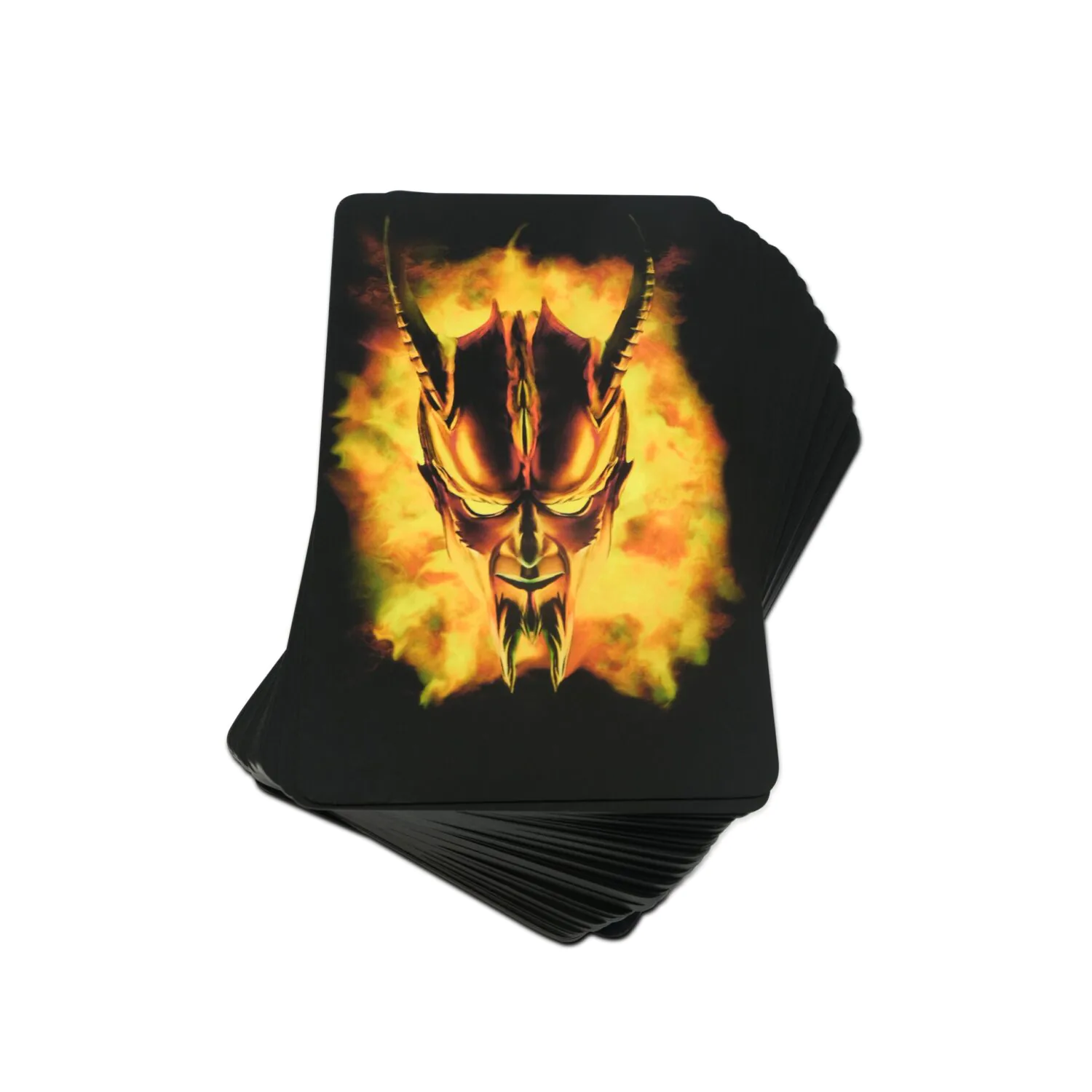
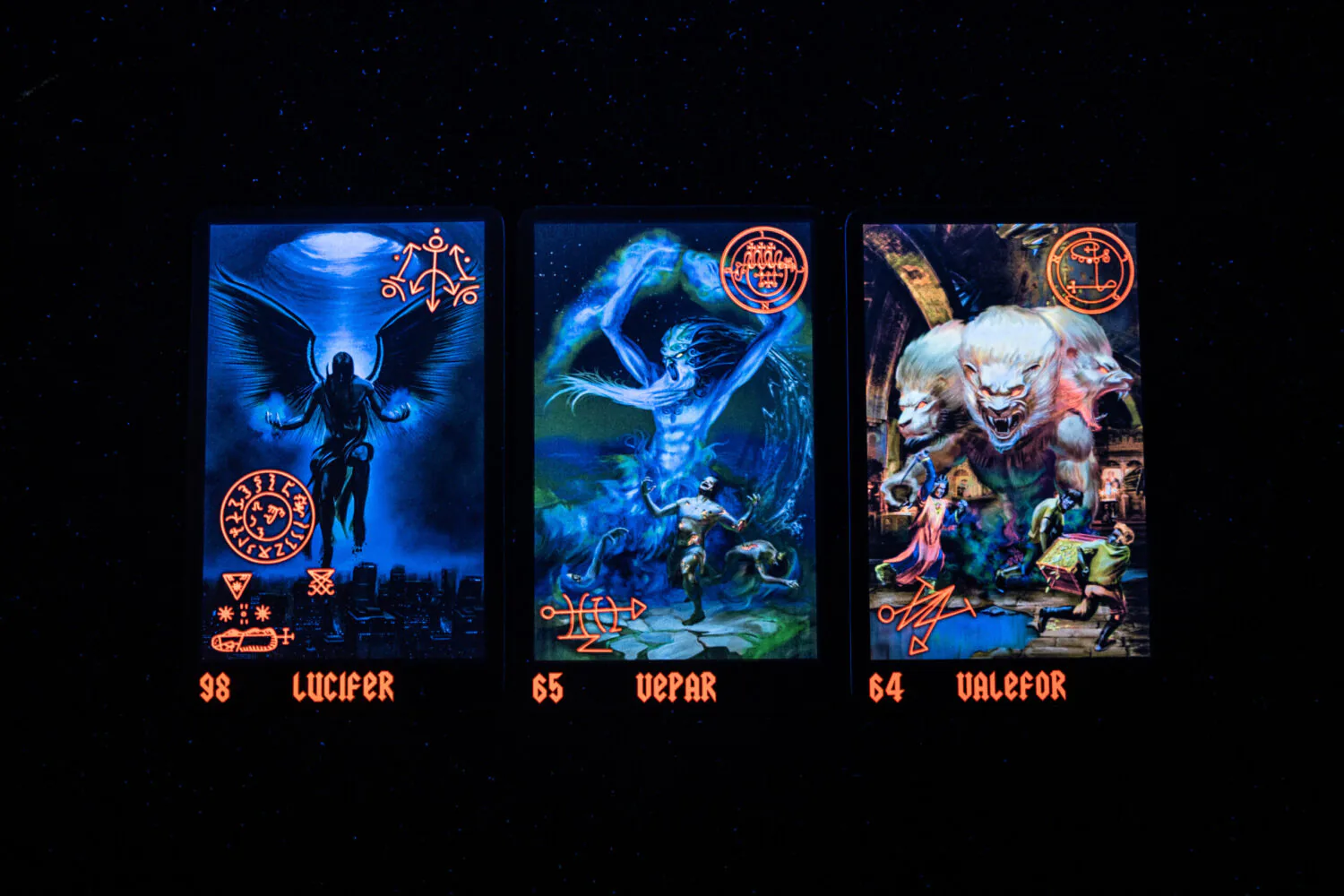
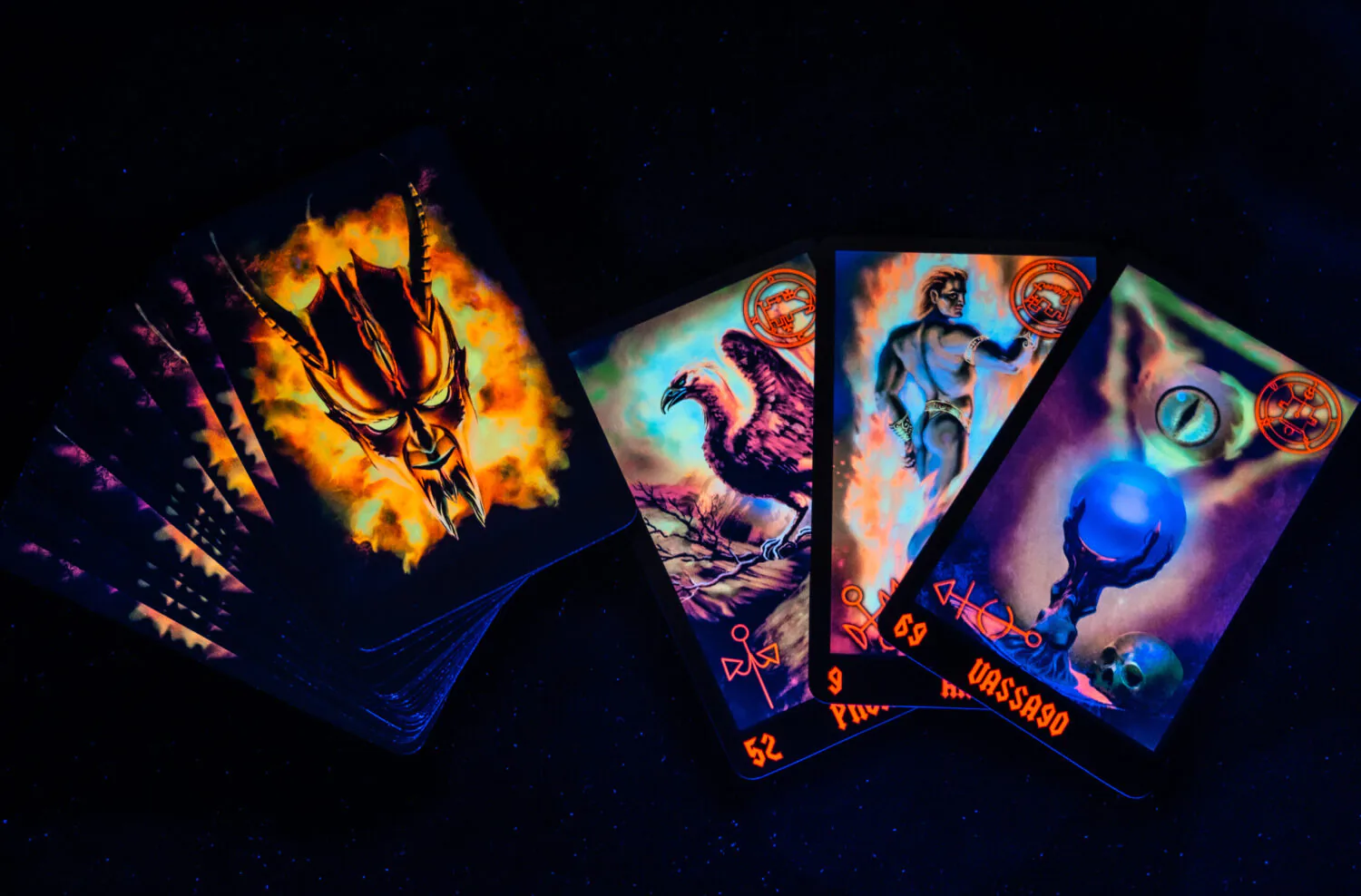
• Tradition: Kabbalah, Demonology.
• Artist: Sergey Krivenchenko
• Package contents: 105 arcana in vacuum packing
+ Book-guide with a detailed description, stylized fire pages, bookmark)
• Stylized compact art-box according to the size of the cards, with a convex application in the form of an eye.
• Box size (mm): 115*75*45
• Card size (mm): 110*70
• All cards have rounded edges, sealed with a special plastic coating, black cut.
• Material: special thick cardboard
• Special Effect: The cards are coated with fluorescent paint, making the cards glow in the dark under ultraviolet light.
• language: English
• Producer: DeLuxe, Odessa, Ukraine.
• ISBN: 9789669686992
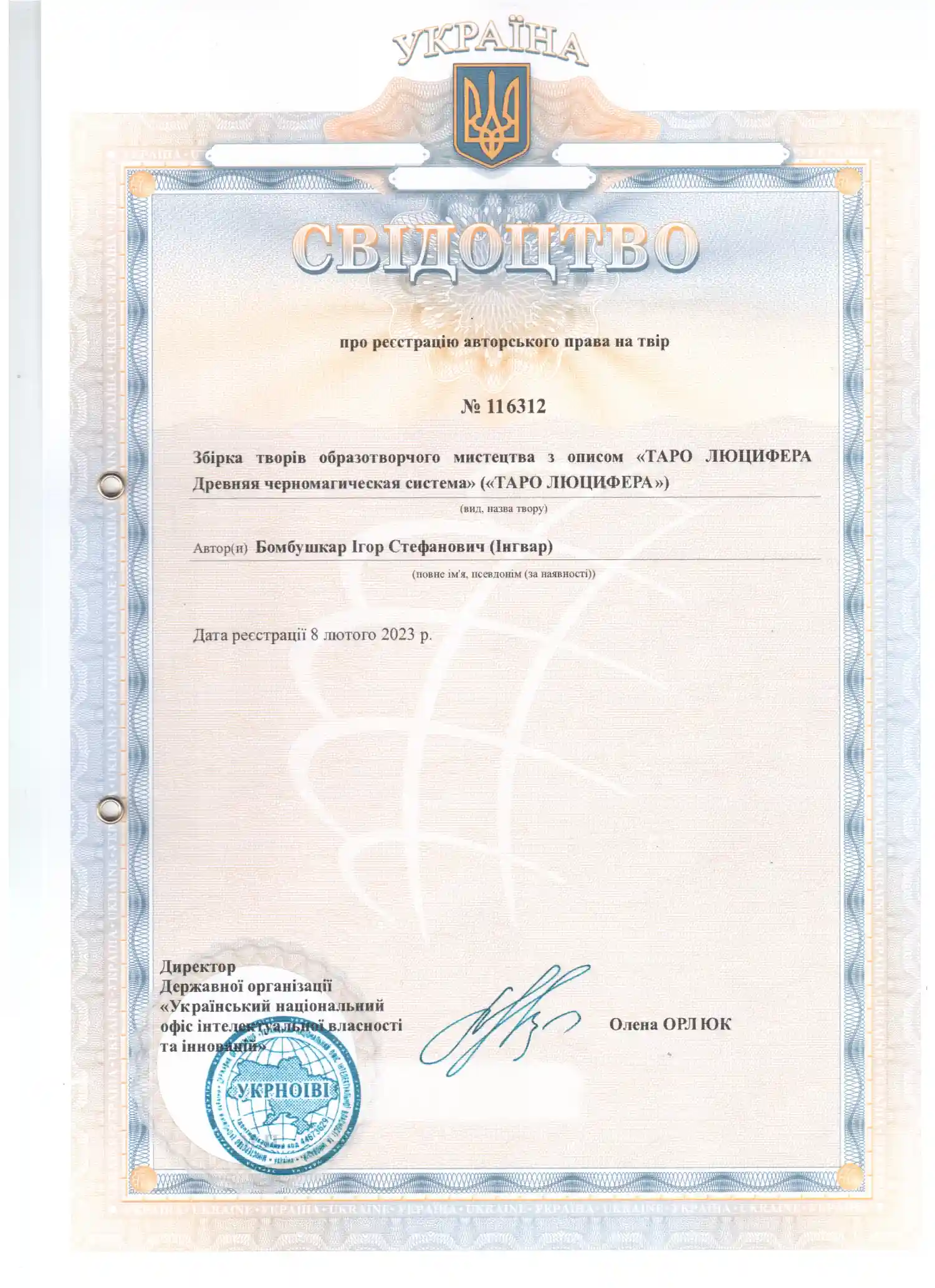
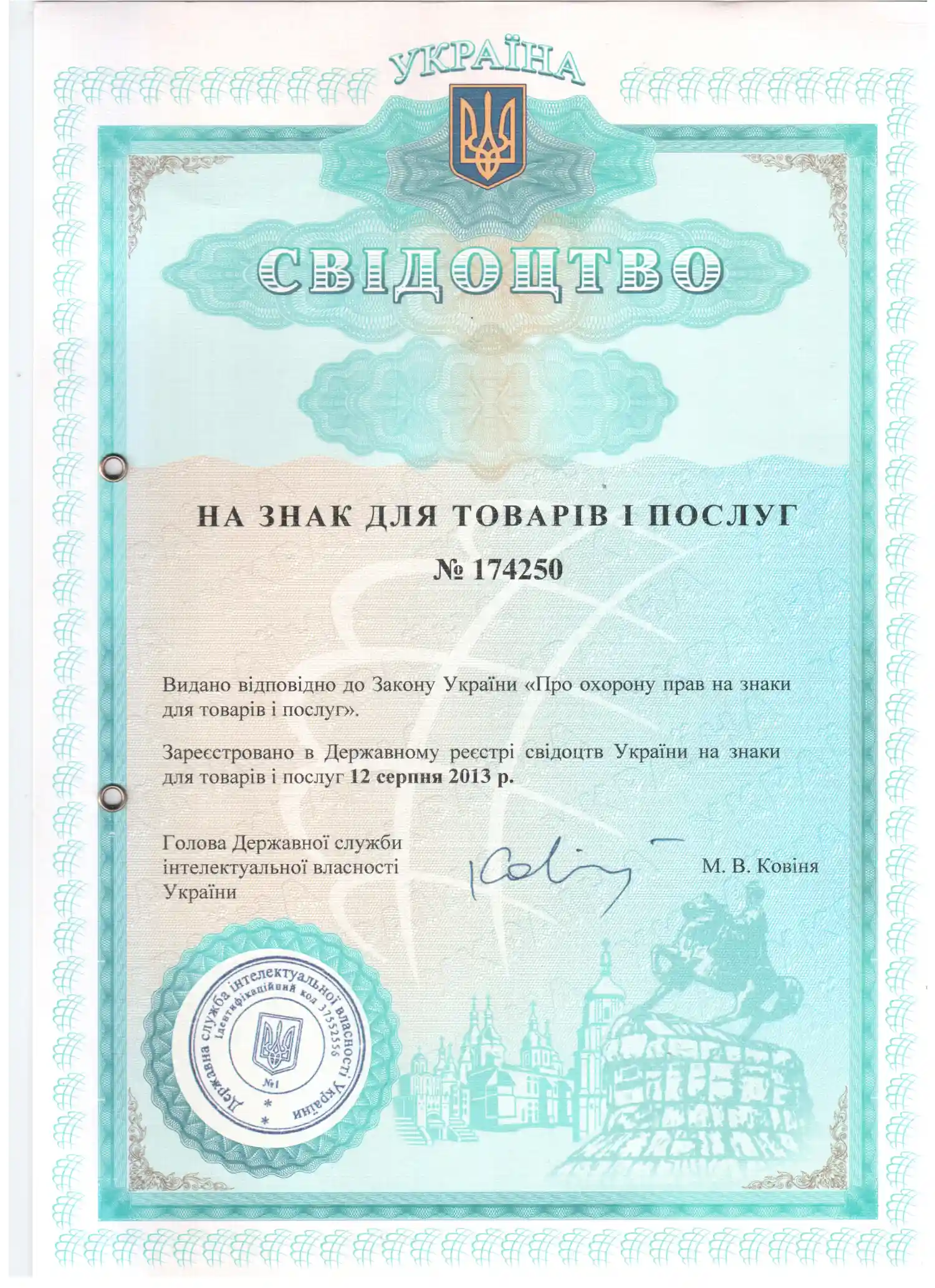
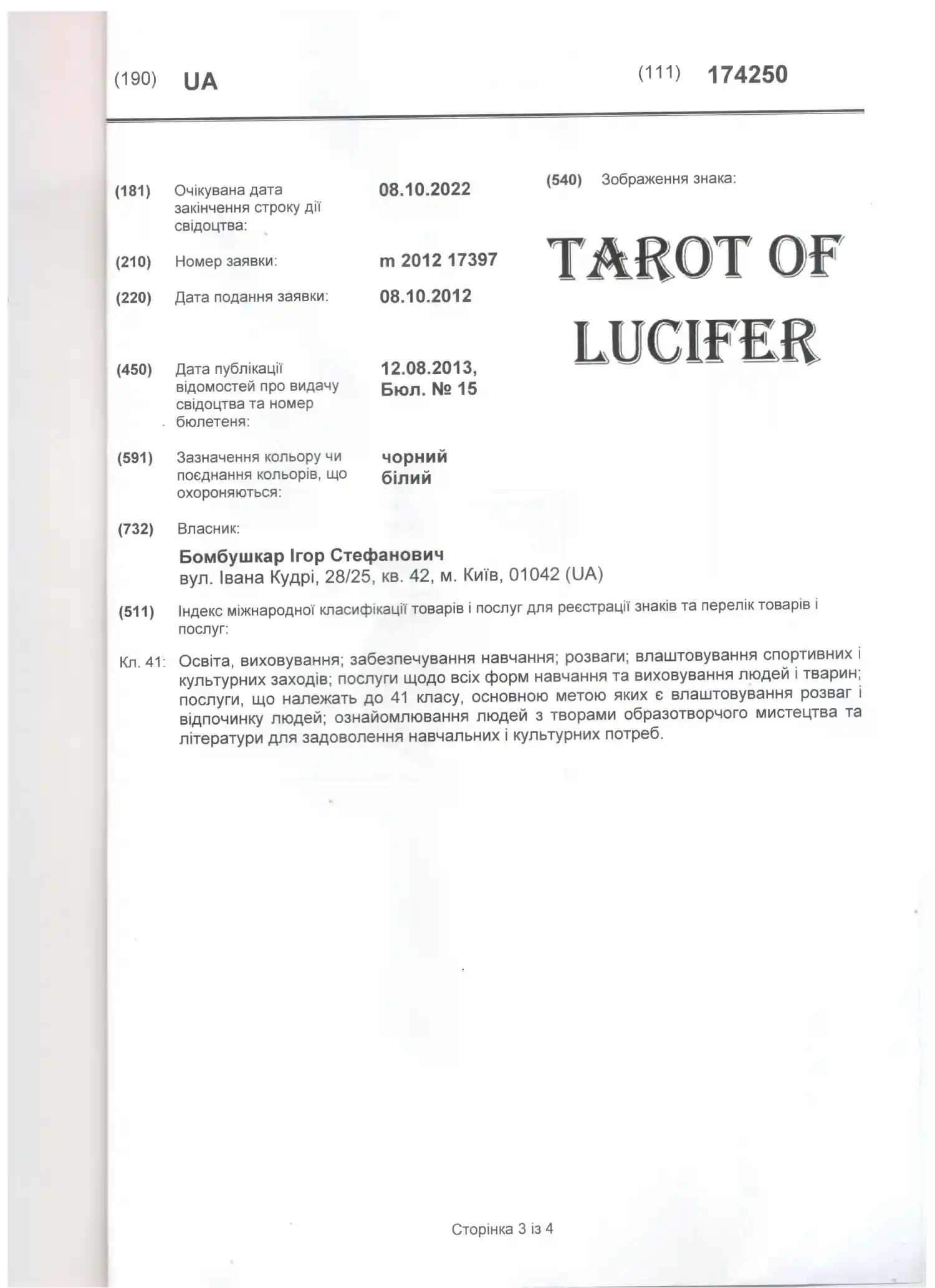
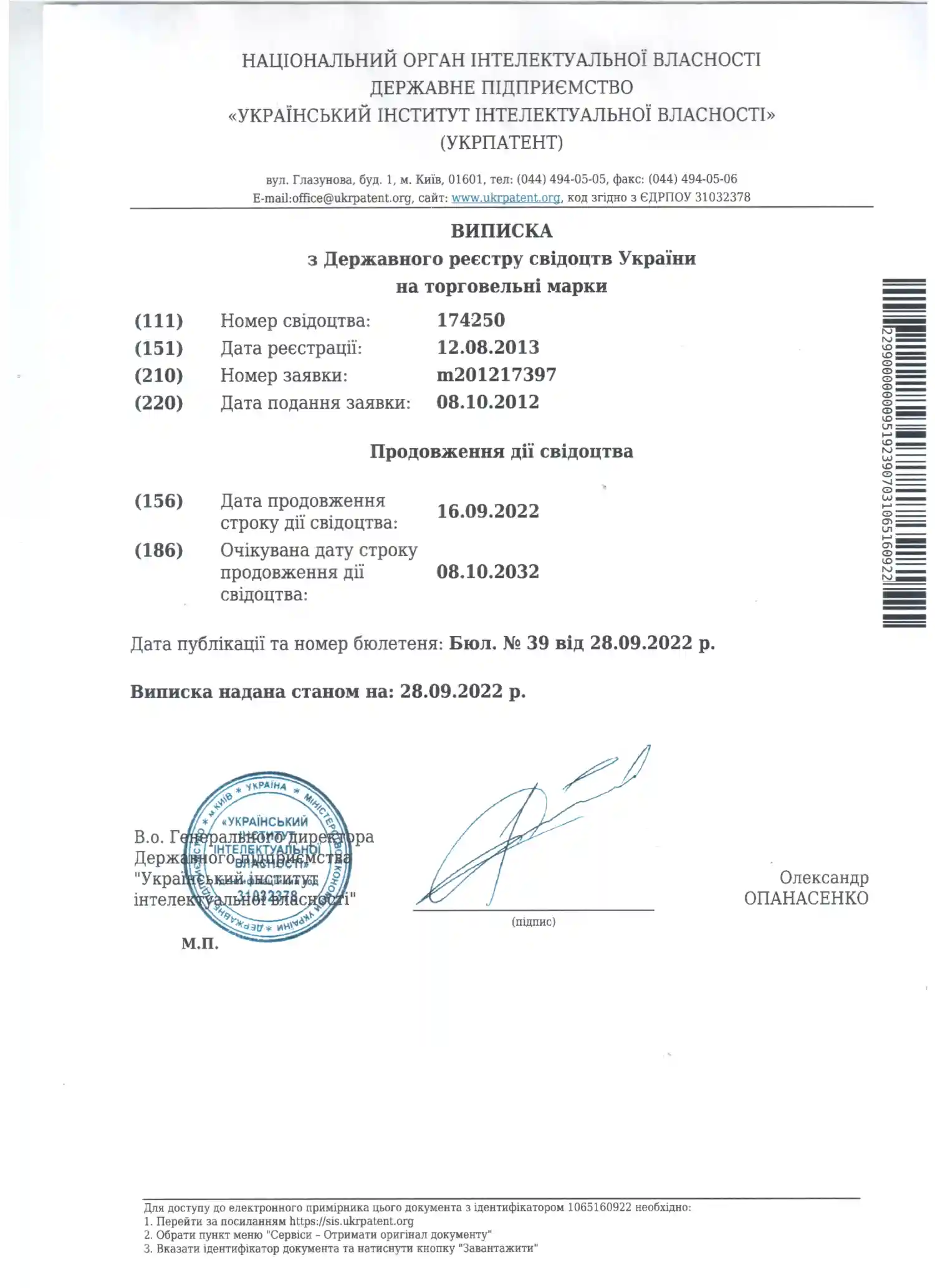
It is reliably known now that there are 7 points of illegal sale of pirated copies of Lucifer’s Tarot, but the magician Ingvar does not prohibit fraudsters to sell his intellectual property, since each person in makes his own choice and is responsible only for himself.
Do pirated copies of Lucifer’s Tarot have Power? Of course not, since the main law of the universe is violated in pirated copies, namely the “law on the equal exchange of goods, values and services” and if the magician Ingvar, as the author, does not receive an equivalent payment for his intellectual work, expressed in the official cost of the Lucifer’s Tarot deck, then not only those who sell fake copies, but also those who buy such a fake pirate deck, without realizing it, automatically become debtors, since “ignorance of the law does not exempt anyone from responsibility” and it is impossible to deceive the subtle world...
Since it is very difficult for a beginner in magic to immediately understand the full depth of the Lucifer’s Tarot system, he definitely needs additional knowledge from the field of Kabbalah, in particular the structure of the Qliphoth Tree and Sephiroth.
This is not a deck that you can just take and immediately start predicting.
Firstly, you need to at least stop being afraid of what is depicted there.
Secondly, it is necessary to change your thinking and understand that everything in the World is united, everything is Divine, stop saying “oh my god!” looking at “horns”!
Thirdly, to have knowledge about the shadow world, about Qlippoth Tree, about the entities that live there. Read certain philosophical and religious books describing the subtle plan, think about it, tune into a positive and creative way.
Fourth, never use shadow energies for harm and self-interest. They don’t like it. If we violate the freedom of others, if we have a passion for enrichment by any means, if we cannot subdue our ego, it is better not to get into this magical system at all. Otherwise, we will become a “tidbit” for them and, of course, we will get, at best, a bunch of unnecessary problems, and at worst…
The main goal in Ingvar’s teaching is the formation (birth) of special transpersonal intrapsychic formations that contribute to the crystallization of the most important qualities in life – CONSCIOUSNESS and INDEPENDENCE.
Since the awakening of this Consciousness and Independence requires the use of special psycho technologies, we can confidently say that all these psycho technologies are aimed at working with the student’s CONSCIOUSNESS.
If these psycho technologies are aimed directly at the development of the Personality and Consciousness of the student, then the emphasis in training is on the program “Sacred Psychology“.
If these psycho technologies are aimed at the student’s desire to master the methods of interaction with the forces of the subtle world, then the emphasis in training is on the program “Magic”, “Witchcraft”, or “Introduction to Parapsychology”.
If these psycho technologies are aimed at developing the ability to influence oneself and others, then the emphasis in training is on the program “Hypnosis” and “Psychotherapy“.
If these psycho technologies are aimed at the desire of the Student to deeply master and learn how to apply the ancient magical system Lucifer’s Tarot, then the emphasis in training is on the course “Lucifer’s Tarot” and “Kabbalah”.
Training program for the course “SACRED PSYCHOLOGY”.
What does sacred psychology mean and why is this course called that way? Speaking quite simply, the word sacred literally means hidden or secret, so sacred psychology is some kind of special, secret, hidden psychology. What exactly is hidden in sacred psychology, in contrast to ordinary psychology?
Sacred psychology hides the secret science of the immortal human soul.
Why was this knowledge of the Soul always hidden? Because the owners of such knowledge can, on the one hand, become independent and reliably protected from any manipulations and, on the other hand, they themselves may want to use this knowledge only for their own personal, selfish interests.
Does all of the above mean that conventional psychology is outdated and meaningless? Of course not, since it was ordinary psychology that gave the World really brilliant psychologists – Vygotsky, Luria, Rubinstein, Leontiev, Halperin (conditionally called bright representatives of Soviet psychology) and – Wundt, Titchener, James, Freud, Jung, Adler, Frome, Frankl, Maslow, Groff (conditionally called prominent representatives of Western psychology). It is extremely important to highlight and emphasize that the Soviet school of psychology was strictly and rigidly materialistically directed and was always imprisoned for the ideology of a single communist party, which cannot be said about democratic Western psychology, whose representatives, in addition to materialism, not only actively explored various idealistic trends, but even were representatives of Masonic and Theosophical lodges, such as William James.
It must be honestly admitted that Soviet psychology no longer exists, and in the Western psychology, due to the close contact of its representatives with the deep wisdom of Eastern religions (especially Jung, Frome and Groff), was born transpersonal psychology, and also a completely new branch, called the psychology of Consciousness.
Lesson 1. Personality. Definition of the concept of “personality”, its formation, structure, birth and development.
Topic 1. Interests.
Topic 2. Beliefs (worldview).
Topic 3. Settings.
Topic 4. “I-image” (“I-concept”).
Topic 5. Personal self-assessment.
Topic 6. The level of claims of the individual.
Topic 7. Self-sufficiency, self-respect and self-love.
Topic 8. The meaning of life.
Topic 9. Self-actualization, levels of development and criteria for a developed personality.
Topic 10. Highest mental functions (HMF).
Lesson 2. Character and its formation.
Topic 1. Philosophical introduction about the complexity of a single interpretation of character.
Topic 2. Character as a starting point of any mental illness.
Topic 3. General presentation and definition of the concept “character”. Topic 4. The structure and composition of character. Facets, sides or traits of character.
Topic 5. The role of circumstances and actions in the formation of character.
Lesson 3. Temperament and its manifestation.
Topic 1. Definition of the concept “temperament”.
Topic 2. The history of the term “temperament”.
Topic 3. Functions of the nervous system and types of temperament.
Topic 4. The composition and functions of temperament and their relationship with mental abilities.
Topic 5. Profession, temperament and individual style of activity.
Topic 6. Marriage and family and type of temperament.
Topic 7. Type of temperament, upbringing and life.
Lesson 4. Capabilities and KAS (knowledge, abilities, skills).
Topic 1. The concept of capabilities.
Topic 2. Capabilities and typology of people.
Topic 3. Inclinations as natural prerequisites for capabilities.
Topic 4. Structure and arrangement of capabilities. The study of capabilities at the level of operations. The study of capabilities at the level of actions. The study of capabilities at the level of activity.
Topic 5. Capabilities and heredity.
Topic 6. Formation and development of capabilities. Teaching methodology. The role of interest in the development of capabilities.
Lesson 5. Activity and its structure.
Topic 1. Action, its structure and composition (according to Galperin).
Topic 2. Theory (scale, system) of systematically-staged formation of mental actions and concepts. The first subsystem of the conditions for constructing a new action, ensuring full orientation and correct execution of the mastered action. The second subsystem of education (birth, acquisition, crystallization) of the desired properties of this new action.
The third subsystem, which ensures the transfer of external action to the mental (ideal) plane, that is, the transformation of the desired action into a mental one, and this is the purest internalization.
Topic 3. Formation of concepts.
Topic 4. Activity and need-motivational sphere.
Lesson 6. Emotions and will regulation of activity.
Part I. Emotions.
Topic 1. What underlies all our internal regulation of activity or behavior?
Topic 2. Stages of the mental cycle.
Topic 3. Definition of the concept “emotions” and the main aspects of their study. Emotions as a mental phenomenon. Emotions as psycho-corporeal (psychophysical, psychosomatic) states. Emotions as a mental process.
Topic 4. Emotional Functions. Evaluation function. Functions of motivation to act. Emotional expression.
Topic 5. Classification of emotions and examples of their study. Natural emotions. Social emotions. Personal emotions.
Part II. Will.
Topic 6. Definition of the concept “will”.
Topic 7. Purpose and function of will.
Topic 8. Free will and locus of control.
Topic 9. Will and risk.
Topic 10. Will and attention.
Topic 11. The structure of a volitional act (process, action).
Topic 12. Volitional qualities.
Topic 13. Education and development of will.
Part III. Emotional-volitional disorders.
Topic 14. Classification of emotional-volitional disorders.
Topic 15. Symptoms of emotional disorders.
Hypothymia, Hyperthymia, Dysphoria, Anxiety, Ambivalence, Apathy, Painful mental insensitivity, Emotional lability, Emotional rigidity.
Topic 16. Symptoms of volitional disorders. Hyperbulia, Hypobulia, Abulia, Parabulia (disorder of inclinations), Obsessive attraction, Compulsive attraction, Impulsive acts.
Topic 17. Syndromes of emotional-volitional disorders. Depression, Mania, MDP, Apato-Abulic Syndrome
Lesson 7. Personality and Essence.
Lesson 8. Cognitive, emotional and body component of personality.
Topic 1. Definition of the concept “thinking”.
Topic 2. Thinking from the standpoint of physiology.
Topic 3. Thinking from the standpoint of philosophy.
Topic 4. Thinking from the standpoint of psychology.
Topic 5. Thinking in the context of Raja Yoga.
Topic 6. The main features of the thinking process.
Topic 7. The mechanism of the thought process.
Topic 8. Basic mental operations.
Topic 9. Classification of forms of thinking.
Topic 10. Formal logic of Aristotle.
Topic 11. Classification of thinking types. Types of thinking according to the ontogenetic level of development. Types of thinking by the nature of the tasks being solved. Types of thinking according to the degree of deployment. Types of thinking according to the degree of novelty and originality.
Topic 12. Violation of mental activity.
Topic 13. Connection of thinking and psychological defenses.
Topic 14. Psyche Defense mechanisms.
Topic 15. Stages of thinking development.
Topic 16. Individual thinking features.
Topic 17. Flexibility of thinking and ways of its development.
Topic 18. Technique for solving mental problems.
Lesson 9. Typology of individuality.
Typology of individuality: basic approaches. The presence of psycho-corporeal correspondences or the structure of body and character. Character and temperament. Character and personality. Natural, social and spiritual prerequisites of character. Character as a special program of individual’s behavior. Accentuations. Classification of accentuations according to Lichko and Leonhard. Character and appearance: phrenology and physiognomy.
Lesson 10. The concept of character anomalies.
The concept of character anomalies. Neuroses, psychosomatosis, psychopathy and psychosis. Protective function of character and classification of psychological defense mechanisms. Classification of reactive psychoses, neuroses and psychosomatosis (all these are psychogenic diseases). Reactive psychoses. Neuroses. Psychosomatosis or psychosomatic disorders (according to ICD-10 code F54). Classification of psychopathy according to Gannushkin, Kebrikov, Kreppelin, Kretschmer, Schneider, ICD-10. Personality disorders. General summary classification of accentuations, psychopathy and modern personality disorders according to ICD 10.
Lesson 11. Consciousness.
Topic 1. Philosophical theories of consciousness. Idealism. Materialistic (physical) monism. Dualism. Functionalism.
Topic 2. Development of ideas about consciousness (Descartes, Locke, Fechner, James, Wundt and Titchiner, Watson and Freud, Wertheimer, Köller and Perls).
Topic 3. The structure of psyche in modern psychology.
Topic 4. Classical psychology of consciousness. Facts and concepts. The structure of consciousness and its properties. The development of ideas about consciousness.
Topic 5. Self-consciousness: definition and its main aspects. Primary and secondary levels of consciousness. Individual and social consciousness. Consciousness as a way to self-knowledge. Criteria of self-consciousness: natural, social, personal. Natural criterion of self-consciousness. Social criterion of self-consciousness. Personal criterion of self-consciousness. Levels of development of self-consciousness. Natural level and aspect of self-knowledge. Natural level and aspect of self-attitude. Social level and aspect of self-knowledge. Social level and aspect of self-attitude. Personal (cognitive) level and aspect of self-knowledge. Personal (cognitive) level and aspect of self-attitude (or self-esteem).
Topic 6. Disorders (disturbances) of consciousness. Syndromes of decrease in the level of consciousness. Stun. Sopor. Coma. Syndromes of obscuration of consciousness. Delirium. Amenia. Oneiroid (dream-like) clouding of consciousness. Twilight clouding of consciousness.
Lesson 12. Antahkarana panchaka-the teachings of the siddhas in the Nath tradition (Nath yoga).
Training program for the course “MAGIC”.
Lesson 1. Definition, history and subject of magic. Comparative theology of the world’s leading religions.
Lesson 2. The concept of “Egregor”. Types and variants of egregores. Magic circle. Magic chain.
Lesson 3. Practical exercises in bioenergy: recruitment, accumulation, cleansing and rejuvenation of the body, increasing personal inner strength, strengthening of the immune system.
Lesson 4. Types of magic: “red”, “gray”, “black”, “white”, “gold”.
Lesson 5. Mantras and names of God (Power). Spells. Enochian Keys.
Lesson 6. The structure of the ritual. Magic tools and their charging.
Lesson 7. Magic clock. Planets, symbolism and individual influence. Moon phases, lunar days. Sun in the signs of zodiac. The main magical holidays.
Lesson 8. Magical alphabet. Choosing a magical name. Numerological correspondences: magic numbers, squares.
Lesson 9. Possible assistants and allies of a magician. Their call and options for mutually beneficial cooperation.
Lesson 10. The laws and commandments of a magician. Options for personal magical protection.
Lesson 11. Fundamentals of necromancy. Fundamentals of demonology. Practice.
Lesson 12. Production of pantacles, talismans. Practice.
Lesson 13. Dedication. Pure practice. Exam. Getting a diploma and a certificate.
The training program for the course “WITCHCRAFT”
Lesson 1. Definition, history and concept of witchcraft. An introduction to modern witchcraft. Examples of witchcraft. Distinctive features of witchcraft from other manifestations of power.
Lesson 2 Witchcraft alphabet, witchcraft name. Witchcraft toolkit.
Lesson 3 Internal ethics and iron self-discipline.
Lesson 4 Working with dead water. Cemetery work. Working with demonic energies. Work with the church.
Lesson 5 Love spells and lapels.
Lesson 6 Whispers, amulets and talismans.
Lesson 7 Attack magic.
Lesson 8 Magic of health and longevity.
Lesson 9 Removal of negative programs, evil eye, curses.
Lesson 10 Work with elements. Magical clock. Planets, symbolism and individual influence. Moon phases, lunar days. Sun in the signs of zodiac. The main magical holidays. Possible assistants and allies of the modern sorcerer. Their challenge and options for mutually beneficial cooperation.
Lesson 11 Corruption, evil eye, curse.
Lesson 12 basics of practical necromancy
Lesson 13 Pure practice. Exam. Getting a diploma and a certificate.
The training program of the course “INTRODUCTION TO PARAPSYCHOLOGY”.
Lesson 1. Introduction to the esoteric (magic) picture of the world
✽ The importance of worldviews and paradigms. Scientific, religious, social and esoteric models. Causes of conflicts between paradigms.
✽ Definition of esotericism and occultism. Esoteric and exoteric knowledge.
✽ Basic provisions of the Ancient Esoteric Teaching (AET). The model of the universe according to AET.
✽ Definition of magic. Approaches to the classification of magic directions. The main directions in magic. Black, white, gray magic. Magical specializations. The difference between sorcery and magic.
✽ Differences between spiritual learning and social learning. Variety of teachers and students. Pop esotericism and its harm.
Lesson 2. Subtle human anatomy
✽ A general idea of the subtle human anatomy. Chakras, subtle bodies and energy connections. Sublimation of energy.
✽ Energy channels and meridians. Violations of energy flow. Main ways of energy movement in human bodies. Manifestations of Yin and Yang principles in a body.
✽ Types of fatigue. Mechanisms of occurrence of physical, emotional, mental fatigue. Practices of proper recovery and rest.
✽Life Force. Principles of generation and reception of vital force.
✽ Initial bioenergetic practices.
Lesson 3. Esoteric model of personality
✽ The phenomenon of consciousness. The emergence of the idea of consciousness. Three waves of attack on consciousness. Modern philosophical and scientific views on the nature of consciousness.
✽ The place of consciousness in the subtle structure of a person. Types of consciousness and mental bodies. Mind, thinking, awareness, will.
✽ Western (European) and Eastern (Sufi) personality models. Ratio of different models. Personality and subpersonalities.
✽ Esoteric model of person. Database. Mirror system. Interpreter system. Compiler system. Qualities of consciousness. The purpose of the Spirit incarnation.
✽ Nous as the fundamental principle (original cause) of the mind. The ratio of Nous and Spirit. Forces as the basis of thinking.
Lesson 4. Spiritual evolution of man
✽ Castes as a level of development of consciousness. Caste of untouchables. Caste of workers. Merchant caste. Warrior caste. Caste of Brahmins (wise men). Caste of magicians. Ivrim, Levites and Cohanim as spiritual castes.
✽ The assemblage point as a focusing lens of an energy cocoon. Assemblage point movement. Initial methods for managing the assemblage point.
✽ Skills and qualities. Spiral of qualities. Qualities developed in different castes. Qualities of a developed person. Principles of spiritual evolution.
✽ Erasure of personality in the afterlife. What is saved and what is not. Manifestation of qualities in the next incarnation. Karmic deformations. Spiritual merit.
✽ The idea of spiritual development. Systems of life motivation. Right, left and middle way. Horizontal and vertical evolution.
✽ Animal and human soul. Relationship between 12-year cycles of development and the seven subtle bodies. Different types of monads.
Lesson 5. Hierarchical structure of the Universe
✽ Physical, ethereal, astral, mental planes.
✽ The Tree of Sephiroth as a scheme for the creation of the world. The worlds of Assiya, Yetzirah, Beria, Atzilut. Sefirot as a separate worlds. Sefira Malkuth, Yesod, Hod.
✽ Informational layers of reality. Informational channels. The Akashic Records and the Second Great Power of the Sephirothic Pantheon.
✽ High frequency angel worlds. The idea of a bright (upper) world. Ascended Masters. The demonic worlds of Klipot.
✽ Initial demonology and angelology. Spirit prints. Why would a magician need to contact the inhabitants of the subtle planes.
✽ The space of dreams. Sefira Netzach. The dreamer’s path and access to informational fields.
Lesson 6. Structure of the Universe (continued):
✽ Egregors as a collective thought forms. Artificial and natural egregors. The mechanism of egregor’s formation. The material and spiritual component of egregor. The benefits and dangers of egregors.
✽ Multiple Universe. Parallel worlds and lines of probabilities. Universe and Anti-Universe. Portal idea. “Symphony of Life”.
✽ Elements as the creative Forces of the Universe. Elements as parameters of reality. Elemental worlds. Cross of the Elements. Natural shifts. Minor Tarot Arcana as tools for working with the elements. The essence of the practices of twos and threes of the minor arcana.
✽ Idea of Forces. Connection of Forces and human mentality. The idea of Great Forces of the sephirotic pantheon. The basic practice of incorporating into the Power of Water (the Power of Poseidon) through the third aspect of Power.
Training program for the course “HYPNOSIS”.
Lesson 1. What is Hypnosis? The unknown history of Hypnosis (Hindu Brahmins – Egyptian and Greek priests and rabbis – fire worshipers – bodhisattvas – Sufis – Essenes – religious-mystical and knightly orders – Paracelsus – Freemasons – Franz Mesmer – Puissegur – James Brad – Sigmund Freud – I.P. Pavlov, V. M. Bekhterev, K. I. Platonov – Wolf Messing and G. N. Smertin – V. G. Evtushenko, G. V. Rozhkovsky, A. M. Kashpirovsky).
Lesson 2. The Science of Hypnosis. The opinion of scientists. Possibilities of Hypnosis.
Lesson 3. Altered state of consciousness and special state of consciousness: theory of trance and hypnotic sleep.
Lesson 4. Who and how becomes a hypnotist? The theory of personality and understanding the mechanisms of influence on consciousness, subconsciousness and superconsciousness. Workshop on the development of superpowers. Sacred anatomy of human nature.
Lesson 5. Mental and biochemical changes in the human body during Hypnosis.
Lesson 6. Accumulation of vital energy for hypnotization. Nutrition recommendations. General approaches and specific working author’s methods. Special places of power.
Lesson 7. The structure and composition of the Soul of ordinary people. Possibilities and prospects for the correct development of the Soul.
Lesson 8. Theory of influence. Suggestion and suggestibility. Types of suggestion: explicit and hidden.
Lesson 9. Hypnotic sleep: classification and stages, the concept of rapport, the basic model of trance induction, the structure of hypnosis.
Lesson 10. Autogenic training and self-hypnosis. Natural sleep and dreams. The author’s method of translating natural (physiological) sleep into hypnotic sleep.
Lesson 11. Phenomena of Hypnosis: pain relief, catalepsy, clairvoyance, telepathy, telekinesis, levitation, age transformation (regression and progression), personality transformation.
Lesson 12. The basic model for building your own hypno formula for any client request. The structure of building an individual hypno formula.
Lesson 13. The Forbidden Fruit of Hypnosis: Posthypnotic Suggestions.
Bonus lesson! (when ordering the entire course)
Author’s methods of treatment of oncological diseases and HIV infection, alcohol and nicotine addiction, cocaine and heroin addiction.
Training program for the course “Kabbalah”.
Lesson 1. The history of Kabbalistic knowledge. Eastern and Western schools: points of contact, differences.
Lesson 2. The essence of Kabbalah is the glyph of Sephiroth Tree
Lesson 3. Methodology of Kabbalistic Science.
Lesson 4. Errors, inaccuracies, misconceptions regarding Kabbalistic knowledge.
Lesson 5. The history of the origin of Life in the Universe. Three Veils of Negative Being. The emergence of Sephiroth Tree is the principle of the Involution of the Macrocosm. Four Kabbalistic worlds – descriptive characteristics.
Lesson 6. Altruistic system of desires. Egoistic system of desires (history and purpose of creation, main performers). Biblical characters: Adam, Eve, angels – the key persons involved in the implementation of the Creator’s program. Miscalculations that led to the “fall of Adam”.
Lesson 7. The initial project of EIN SOFA.
Lesson 8. Tree of Qliphoth. The concept and essence of Qliphoth. Correspondence to the three veils of the Negative Being of the Sephiroth Tree. Kingdoms and kings. Palaces or the name of Antisephiroth.
Lesson 9. The Tree of Life from the Microcosmic point of view. The structure of the human body. Virtues. Sephirah and acquired skills (recommended practical exercises).
Lesson 10. “World of Formation” by Yetzirah – key planets. Their characteristics, and connection with the pantheon of Greek and Egyptian gods, as well as practical benefits. Correspondence of the planets to the days of the week, strong and weak aspects that control the planets. Magic paraphernalia and tools of the adept. Pentacles (keys) of the seven planets. The role of the planets in the “stages of the life path”.
Lesson 11. “World of Creation” by Briah – Zodiac signs. The principle of mirror reflection. 72 Angels of Light. 72 Angels of Darkness.
Lesson 12. Gematria and the Gate of Tarot Initiation.
Lesson 13. 9 Gates of Initiation through the planetary directors. Essence and order of passage. Gate opening technique. Passing nuances.
Training program for the course “LUCIFER’s TAROT”.
“Lucifer’s Tarot” is a magical and predictive system of the ancient world, first described by the real and official magician – Ingvar.
This unique deck came to life on the basis of ancient knowledge and ancient wisdom. It contains secrets of Kabbalistics, magical secret astrology, the Qliphotic and Sephirothic world, its infernal inhabitants, the rules and laws of summoning the Great Dark Gods, Kings of the Night, Archdemons, Princes of Qliphoth , Princes of Hell.
Working with the Lucifer’s Tarot deck will not be difficult even for a beginner. To read the layout, you need to carefully study the interpretation of the arcana (and do not be embarrassed that there are 105 of them, and not 78 as in the standard tarot system), but your efforts will be rewarded with extraordinary accuracy of predictions. The ancient magical system “Lucifer’s Tarot” is a bridge and an intermediary between the world of Darkness and the practitioner of the Black Art.
Lesson 1. The history of the deck. Goetia. Princes of Darkness and Aleister Crowley. Rudolf Steiner, Helena Blavatsky and Jan Stoltenberg. Junior Dark Geniuses. Diary of self-observation. Features of interaction with the deck. Junior Dark Geniuses (from 1 to 72 arcana). How to properly charge the deck and write a diary of introspection and dreams?!
Lesson 2. Principles of drawing up your own layouts. Analysis of the layout “Black Cross”
Lesson 3. Determination of the patron among the Princes of Darkness (by birthday). Patron Interaction Techniques.
Lesson 4. Tree of Qliphoth. Senior Dark Geniuses – Princes of Qliphoth (from 73 to 84). Correspondence to their zodiac signs, elements and months of the year. The layout “Pentagram”.
Lesson 5. Hosts of demons (from 85 to 94 arcana). Stages of initiation. Description, properties. Hellish mansions. Establishing a hierarchical level of your essence. Layout “Pentagram” (extended)
Lesson 6. Archdemons. Birth layout. Expanded layout.
Lesson 7. Determination of the Main patron among the Princes of Klipot (by time of birth). Interaction techniques.
Lesson 8. Characteristics of the main layouts: – Layout of two triangles – Lilith (for witches) – Nahema (for witches) – Astaroth (for money matters) – Asmodeus (for enemies) – Beelzebub (for sorcerers) – Lucifer (for advice and help) – Diagnostics of the negative.
Lesson 9. Receiving Initiation into the “Lucifer’s Tarot” system.
Description of the author’s method of PSYCHOTHERAPY by
MAGICIAN INGVAR.
All deep inner work consists of three interrelated points:
- Extension of human biological life.
- Transformation of consciousness in four stages: compaction of consciousness, expansion of consciousness, separation of consciousness and transfer of consciousness.
- The author’s method of psychotherapy, which is based on ecological psycho programming of the brain with the creation of specific artificial programming situations designed to excite in a person his inner pharmacy and activate the normal memory matrix, which was first discovered by A.M. Kashpirovsky.
The author’s method of psychotherapy developed by Ingvar stems from the assertion that each historical era needs its own method of psychotherapy.
The same statement can be put in other words – each national mentality, or each national identity, requires its own psychotherapy.
What differs Ingvar’s psychotherapy from others? There are only three such features:
- Ingvar’s method of psychotherapy stems from the ancient esoteric teaching (grains of which can be easily found in the scriptures of all known world and national religions) and involves turning to your own sleeping higher mind, as the bearer of constant meanings, and not to your lower mind, which is the source of endless impressions and ever-changing desires.
- Ingvar’s method of psychotherapy naturally leads to self-knowledge, the natural consequence of which is the discovery of yourself, the meaning of your life and your destiny.
- Ingvar’s method of psychotherapy suggests an opportunity for self-development and self-correction that is adequate to the needs of today, which absolutely excludes the possibility of manipulating or any dependence from the psychotherapist.
In 2016, the publishing company "DeLuxe" (Ukraine, Odessa) published the second and third editions of the Lucifer’s Tarot in large and small versions.
And in 2017, with the same "DeLuxe", the magician Ingvar signs an exclusive agreement for five years to publish the Lucifer’s Tarot in English in order to enter the European and American occult markets.
Already in 2021, Deluxe, through Amazon successfully made full sold out and for 2022 the English version became inaccessible for English-speaking practitioners, who simply flooded Ingvar’s office in Kiev with their endless requests for an immediate reprint of Lucifer’s Tarot in English.
Based on the fact that DeLuxe completely ceased its activities in 2022, it became legally impossible to extend the copyright agreement with the copyright holder.
That’s why the magician Ingvar, who solely owns the copyright for the Lucifer’s Tarot, in January 2023 decided to declare to the whole world that he is ready to consider signing an exclusive agreement with European and American publishing companies to publish the sixth edition of the Lucifer’s Tarot in English , Spanish, French, Italian, or any other language of the publisher's choice.
If any of the well-known publishing companies in the occult world wants to officially publish Lucifer’s Tarot in their country, the magician Ingvar is ready to sign an exclusive copyright agreement with them.